
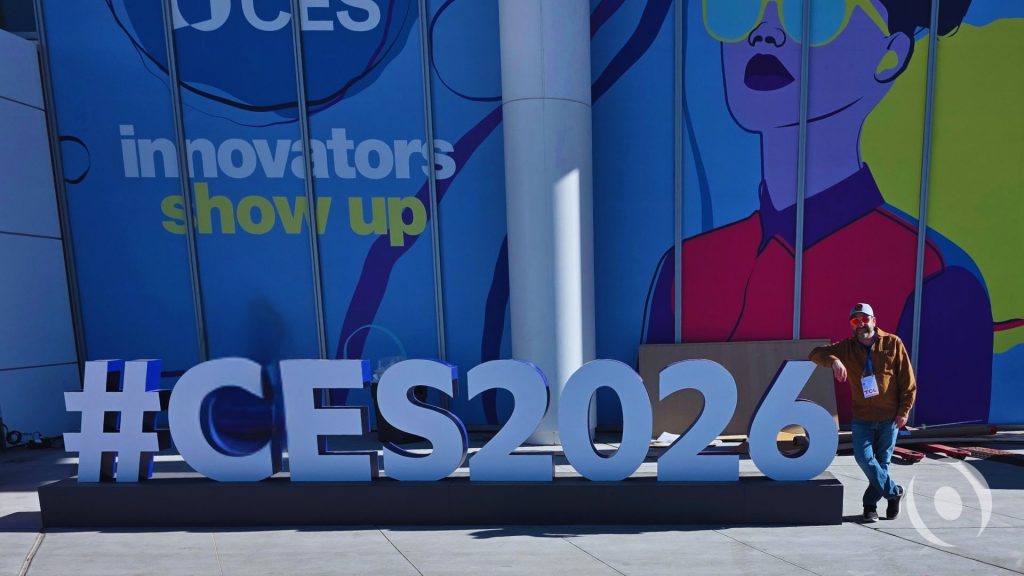
Months after Consumer Electronics Show (CES) 2026, the technologies showcased in Las Vegas remain highly relevant to the future of construction and engineering.
Artificial intelligence, construction robotics, smart energy systems, connected equipment, and automated inspections are continuing to influence how the built environment is designed, evaluated, and maintained.
As the industry begins looking toward CES 2027, this is an ideal time to revisit the innovations that stood out to our team at CES 2026. More importantly, it is an opportunity to consider which technologies are moving closer to practical use, what they could mean for South Florida, and what engineering professionals should continue watching.
At NOHMIS, we do not view innovation as a passing event or annual trend. We study how emerging tools could support safer structures, more accurate inspections, smarter building systems, and better project outcomes.
Here are the CES 2026 technologies that still have our attention and the developments we will be watching as the next CES approaches.
AI and Engineering Collaboration: The IEEE Experience
At the Institute of Electrical and Electronics Engineers (IEEE) booth, the team participated in the AI “Sizzle Experience”, an interactive demo where artificial intelligence generated custom music and album covers. It was a creative example of AI’s potential, but its real value lies in what it represents: the convergence of data, creativity, and engineering precision.
IEEE’s presence also underscored the organization’s leadership in global technology standards, from AI ethics and Wi-Fi protocols to the National Electrical Safety Code (NESC), all of which influence how we design safe, reliable systems in the field.
For engineering professionals, this was a powerful reminder that AI isn’t just a tool, but an evolving partner in structural analysis, inspections, and design optimization.
“The same AI that can compose a song today could one day optimize load paths or enhance structural accuracy tomorrow.”
Smarter Energy Systems: EcoFlow’s Next-Gen Home Panel
Another standout was the EcoFlow Smart Home Panel, an integrated, UL 9540-certified energy management system that combines a panel, inverter, and battery into one seamless platform.
Through its intuitive app, users can monitor power consumption at the circuit level, estimate backup duration, and even control individual circuits remotely.
This technology embodies the evolution of smart, sustainable MEP systems by merging efficiency, control, and safety. For NOHMIS, it reflects the type of forward-thinking solutions that are increasingly relevant to energy-conscious engineering and architectural design across South Florida.
Automation and Robotics: Redefining the Job Site
One of CES 2026’s most discussed topics was construction robotics, and its enormous market potential. With labor shortages continuing to impact the industry, autonomous and semi-autonomous robots capable of handling repetitive tasks like painting, drywalling, and material handling could significantly reduce costs and project timelines.
Industry analysts estimated that a $1,000 autonomous robot could potentially perform work equivalent to $5,000 in manual labor, marking a major shift in how construction economics may evolve.
At NOHMIS, we view automation as a complement to human expertise, not a replacement. Robotic precision, paired with skilled oversight, can enhance quality control, minimize human error, and accelerate project delivery without sacrificing craftsmanship or safety.
John Deere’s Semi-Autonomous Roadway System
Over at the John Deere booth, the spotlight was on a semi-autonomous roadway construction system that integrates CAD plans and site surveys directly into its operation.
This innovative equipment lineup including a milling unit, resurfacing machine, and roller, can work together to execute complex paving operations with data-driven precision.
Though still requiring an operator, the system is clearly built for the future of connected construction, where digital blueprints guide machinery to exact specifications.
Joseph described it best after climbing into the operator booth:
“This is construction meeting intelligence. It is CAD precision in motion. You can feel the future from the operator’s seat.”
Bobcat’s Futuristic Construction Equipment: Safety and Awareness
At the Bobcat exhibit, we got hands-on with one of the most impressive demonstrations of safety innovation.
The next-generation Bobcat features:
- 360° rearview cameras
- Motion detection sensors that automatically stop operation to prevent rollovers or collisions
- Ergonomic smart controls designed for precision and operator comfort
This “futuristic Bobcat” represents the direction the industry is heading, wherein automation, visibility, and operator intelligence come together to improve safety and efficiency on job sites.
As Joseph described it:
“This is the future of construction: intelligent, responsive, and designed with safety in mind.”
The JLG Boom Lift and Automated Welder: Engineering Perfection
Perhaps the most exciting discovery of CES 2026, and a clear favorite for our team, was the JLG lift and boom welding system demonstration.
This setup showcased two synchronized lifts working together with a boom-mounted robotic welder, capable of performing welds with incredible precision and repeatability.
During the live demo, the system lifted and positioned steel beams with perfect alignment while the boom automatically executed clean, uniform welds and eliminating the inconsistencies often caused by human fatigue or error.
For an engineer and inspector, the implications are profound.
A system like this not only ensures accuracy and consistency but also creates safer and easier-to-inspect welds, dramatically reducing rework and structural risk.
“Seeing a robotic system perform a weld with that level of control is an engineer’s dream. It points toward precision that can be measured, reviewed, and improved.”
This technology perfectly embodies the future of automated construction: machinery and engineering intelligence working side-by-side to deliver results that are stronger, safer, and more efficient than ever before.
Engineering Innovation with Purpose
Looking back at CES 2026, the most important takeaway was not a single machine or software platform. It was the growing connection between engineering knowledge, artificial intelligence, automation, safety, and real-world construction.
As CES 2027 approaches, we will be watching how these concepts develop into practical tools. We are especially interested in technologies that can improve:
- Structural and building inspections
- Design accuracy and coordination
- Construction quality control
- Job site safety
- Energy resilience
- Project documentation
- Seawall and waterfront structure evaluations
At NOHMIS, we believe innovation should always serve a clear purpose. New technology must be evaluated through the lens of safety, building codes, professional responsibility, and the needs of each individual project.
CES 2026 gave us a glimpse of what may be possible. The months since then have given the industry an opportunity to determine which ideas have the potential to make a meaningful difference.
As we look toward CES 2027, one principle remains unchanged: technology can support better engineering, but experienced professionals must continue to guide the decisions.
The future of engineering isn’t coming; it’s already being built.
Contact:
NOHMIS Design, Engineering & Inspections
2195 N. Powerline Rd, Suite 2
Pompano Beach, FL 33069
+1 954-591-8361
Services@NOHMIS.com
www.nohmis.com