
Nobody Looks Forward to the Recertification Notice
The letter shows up, and the questions start right away. How much is this going to cost? How long will it take? What are the engineers going to find?
Most owners, managers, and boards want the same three things out of a building safety recertification: a building that is safe for the people in it, a report the building department accepts, and no surprises in the budget. Those goals are not in conflict. With the right approach, recertification is a manageable, predictable part of owning property in South Florida.
What Recertification Is Really Asking
South Florida is hard on buildings. Salt air, constant sun, humidity, and hurricane season wear on concrete, steel, stucco, waterproofing, and electrical equipment faster than in most of the country. That is why our counties require buildings to be inspected and recertified as they age.
At its core, recertification asks one question: is this building safe for continued use and occupancy?
It does not ask whether a building built in 1985 meets the code of 2026. Broward County’s program policy says so directly: the purpose of the inspection is not to determine whether an existing building complies with the current Florida Building Code. Miami-Dade’s guidelines look to the code in effect when the building was built, and Florida’s milestone inspection law for condominiums takes the same position.
Within that framework, a great deal is left to the professional judgment of the inspecting engineer, and that judgment shapes the scope, timeline, and cost of everything that follows. Two engineers can walk the same building and hand the owner very different reports. A report that separates what affects safety from ordinary wear and maintenance gives you a clear path forward. A report that treats every hairline crack as a required repair can quietly turn a safety review into a renovation project.
How Surfside Changed the Rules
On June 24, 2021, part of Champlain Towers South in Surfside collapsed, killing 98 people. The building was going through its 40-year recertification at the time. The tragedy led to sweeping changes in how Florida inspects its older buildings.
In 2022, the state passed Senate Bill 4-D, which created mandatory milestone inspections for condominium and co-op buildings three stories or taller and required associations to complete structural integrity reserve studies and fund reserves for key structural components. Locally, the timelines moved earlier. Miami-Dade lowered its first recertification from 40 years to 30. Broward replaced its 40-year program with one that begins at 25 years. In Palm Beach County, which had no countywide program, cities such as Boca Raton adopted their own.
The goal behind all of these changes is the same: catch serious structural and electrical problems earlier. For most owners, that means the first inspection arrives sooner than it used to, which makes it all the more important to work with an engineer who keeps the focus on safety.
Requirements Depend on Where Your Building Is
Recertification is not uniform across South Florida. Each county sets its own program, cities administer it through their own building departments, and condominium and co-op buildings three habitable stories or taller also fall under Florida’s milestone inspection law, which generally starts at 30 years and repeats every 10 years. In some jurisdictions, one inspection can satisfy both.
Here is a quick look at the three counties we work in most.
Miami-Dade County
Miami-Dade’s program dates back to 1975, and its requirements are the most extensive of the three.
- When: Buildings become subject to recertification at 30 years of age and every 10 years after. Some condominium and co-op buildings near the coast are on an earlier schedule.
- What: Structural and electrical recertification reports, signed and sealed by a Florida-licensed engineer or architect, on the County’s required forms.
- Thermography: Electrical systems of 400 amps or more require an infrared thermographic scan.
- Parking lot lighting: The recertification package includes a certification that parking lot illumination meets County standards.
- Guardrails at the water: Parking lots next to a canal, lake, or other body of water need guardrails. If they are missing, a permit to install them is required.
- Glass facades: Threshold buildings with structural glazing also have a separate facade inspection every five years.
- Timeline: Reports are generally due within 90 days of the notice, and late submittals carry fees and potential citations.
- Exempt: Single-family homes, duplexes, and small buildings of 2,000 square feet or less with an occupant load of 10 or fewer.
Learn more: Miami-Dade County Building Recertification
Broward County
Broward’s Building Safety Inspection Program is set by the Broward County Board of Rules and Appeals (BORA) and enforced by each city’s building department. It replaced the old 40-year program and now starts much earlier.
- When: 25 years from the certificate of occupancy, then every 10 years.
- What: Structural and electrical inspections. Broward’s electrical report covers the service, panels, and wiring, along with life safety items such as emergency lighting, exit signs, fire alarm, and emergency power systems.
- Thermography and site lighting: Thermal imaging is left to the inspecting professional’s judgment, and there is no separate parking lot lighting certification.
- Also covered: Parking garages, guardrails, and any balconies, elevated decks, docks, or seawalls that are attached to or support a structure.
- Timeline: When repairs are needed, they are generally due within 180 days of the report unless the building official sets a different schedule.
- Exempt: Buildings under 3,500 square feet (unless they house equipment that serves the main building), single-family homes, duplexes, fee simple townhouses, and federal and state government buildings.
- Worth knowing: For condominium and co-op buildings, the Broward inspection can satisfy the state milestone inspection at the same time.
Learn more: Broward County Building Safety Inspection Program
Palm Beach County
Palm Beach County works differently. There is no single countywide recertification program like the ones in Miami-Dade and Broward.
- Unincorporated Palm Beach County: Condominium and co-op buildings three stories or taller follow the state milestone inspection, which is a structural inspection. The County lists the first inspection at 25 years for buildings within three miles of the coast and 30 years for others, then every 10 years.
- City programs: Some cities, including Boca Raton, have adopted their own recertification programs, so requirements can change from one city line to the next. Boca Raton’s program covers condominium and co-op buildings three stories or taller and threshold buildings, starting at 30 years (25 for coastal condominiums) and then every 10 years.
- Engineer’s judgment: Outside the cities with their own programs, requirements are lighter than in Miami-Dade or Broward. Even where a city program applies, more is typically left to the engineer. Boca Raton’s guidelines, for example, leave the extent of the inspection to what the inspecting professional deems necessary.
Learn more: Palm Beach County Milestone Inspections and City of Boca Raton Building Recertification Program
Keeping track of all of this is our job, not yours. Tell us where your building is and when it was built, and we will tell you what applies, what the building department will expect, and how much time you have.
What Inspection Day Looks Like
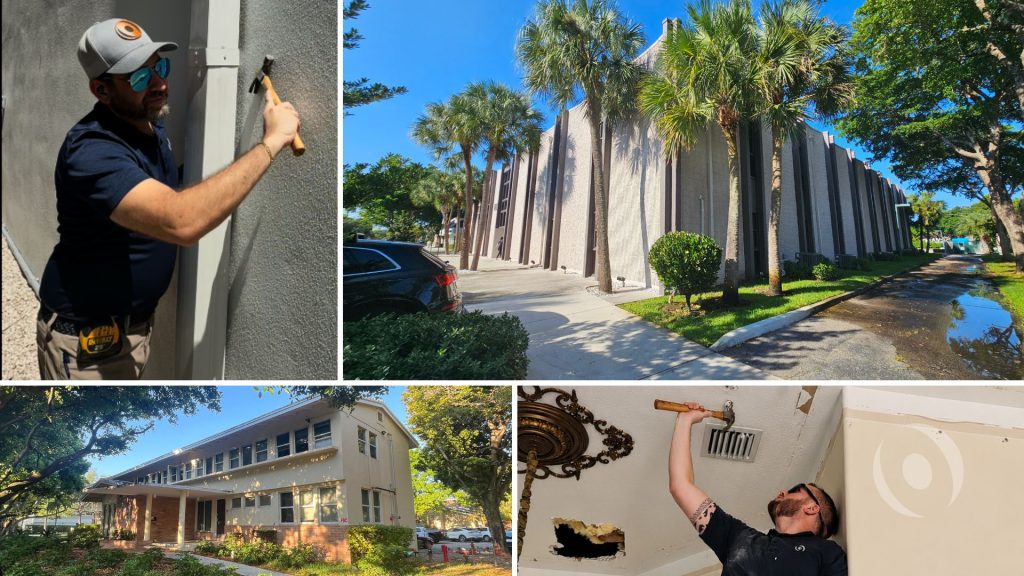
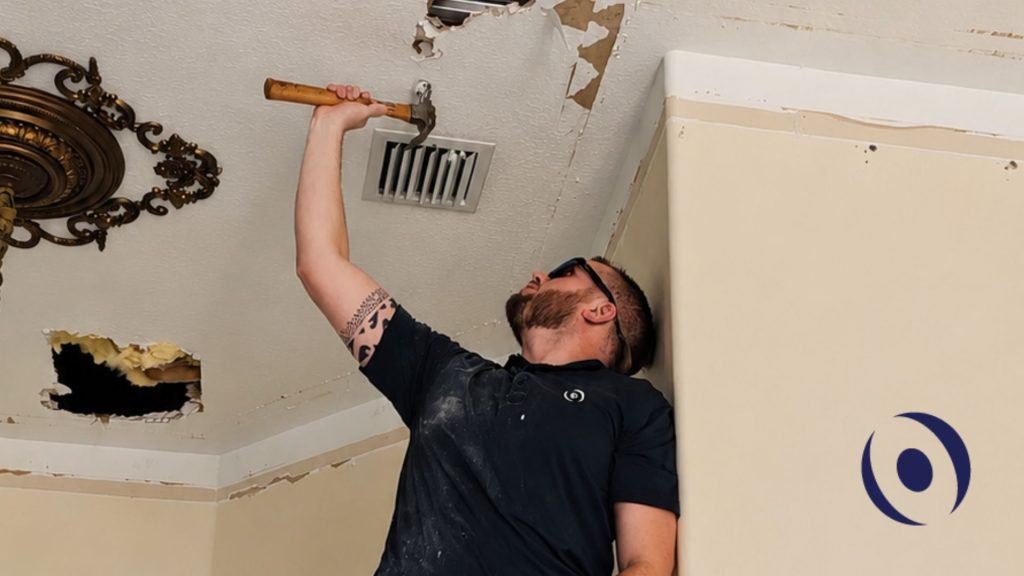
Inspection day is low-key. Our engineers coordinate access ahead of time, walk the property, and photograph what they see, working around residents and tenants as much as possible.
On the structural side, we look at the elements that carry the building: columns, beams, slabs, balconies, walkways, railings, and the roof. On the electrical side, we review the service equipment, panels, wiring, and the life safety items your county’s program calls for. Parking garages, seawalls, and other site structures are included when the program covers them.
Safety First, Without Turning It Into a Renovation
Our focus is on what recertification is built around: the structural elements that carry the building and the electrical systems that keep it running safely.
When we find a condition that affects structural integrity or life safety, it gets addressed. That part is not optional, and we will be clear about it.
Many of the other things we see along the way fall into a different category. A joint that could use new sealant, a stucco crack worth keeping an eye on, an area where better waterproofing would help keep water out over the long run. Those are worth knowing about, so we note them as recommendations and maintenance items that you can plan and budget for. We keep them clearly separate from what recertification requires.
What You Get Back
A signed and sealed report, prepared by licensed professionals, in the format your building department requires.
Just as important, it is a report you can use. Required items are clearly identified. Recommendations and maintenance items are listed separately, so your board can plan ahead without confusing the two. Photographs show your owners what we saw, and the language is plain enough to read out loud at a meeting.
That separation is the part boards tell us they value most. There is a real difference between a required repair and a maintenance note, and a report that treats them the same is not doing anyone any favors.
When Repairs Are Needed
If the report does call for repairs, the same team can design them. NOHMIS provides architecture, structural, and MEP engineering in house, so the engineers who inspected your building can prepare the repair drawings for concrete restoration, railing replacement, waterproofing, or electrical corrections. Because we already know the building and why each item was flagged, the repair scope stays focused on what is actually needed. We prepare signed and sealed documents your contractor can build from, and we stay available for questions during construction.
Explore our inspection services, structural engineering, MEP engineering, architectural design, and seawall and dock work.
A Partner for Every Cycle
Recertification comes back around every ten years. Each time, the building is a little older, board members and managers have changed, and the last report may be hard to find.
When we inspect your building again, we already have your drawings, photographs, and history. We know what we noted last cycle, what was addressed, and what has changed since. That context makes each inspection more useful, and it lets us tell the difference between something new and something that has been stable for years.
Over time, that is how a compliance requirement becomes a simple maintenance plan, and why the next cycle tends to feel easier than the first.
Why Owners and Boards Work With Us
We came out of construction before we came into engineering. We think about how a repair actually gets built, what it will cost, and when it makes sense to do it. We work throughout Palm Beach, Broward, and Miami-Dade, so we know how the same building can be handled differently from one jurisdiction to the next.
And we talk to owners like people, not like a code section.
Let Us Take This Off Your Plate
Whether a notice has already arrived or you are getting ahead of one, our licensed engineers can inspect your property, tell you plainly where it stands, and help you plan what comes next. Learn more at www.nohmis.com.
Contact:
NOHMIS Design, Engineering & Inspections
2195 N. Powerline Rd, Suite 2
Pompano Beach, FL 33069
+1 954-591-8361
Services@NOHMIS.com
www.nohmis.com
Please note: Recertification requirements and deadlines are set locally and change periodically. The summaries above reflect county and city resources as of October 2026 and are not a complete list of requirements. Confirm current requirements with the building department that has jurisdiction over your property. The graphics in this article are illustrative and do not depict any specific client property.