
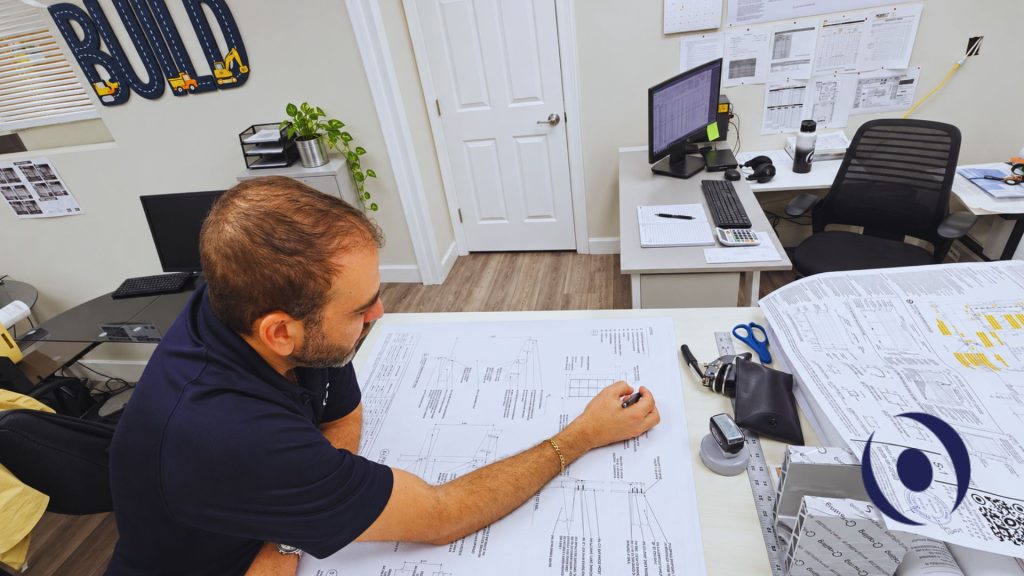
Every three years, Florida rewrites the rulebook for how buildings are designed, permitted and inspected. The next rewrite arrives on December 31, 2026, when the 9th Edition (2026) Florida Building Code officially replaces the 8th Edition (2023). Many in the industry are already calling it the 2027 code because it governs work that will be permitted next year, but whatever you call it, the effect is the same: the edition in force on the day you apply for a permit is the one your project must follow.
Our design and engineering team at NOHMIS has spent the past few weeks working through the official Analysis of Changes section by section. Some updates are minor wording cleanups. Others will change what shows up on a set of drawings, what an inspector asks for at final, and how much lead time a South Florida project needs. Here is what stood out to us, explained in plain language for owners, developers, property managers and fellow design professionals.
The Calendar Decides Your Code
Under Florida law, the code edition in effect on the date of your building permit application governs the work. Applications first submitted on or after December 31, 2026 must comply with the 9th Edition. Miami-Dade County has gone a step further and noted that online submissions received after 4 p.m. on December 30 will fall under the new edition.
One detail catches many owners off guard: zoning approvals and other entitlements do not lock in the older code. Only a building permit application does. Each jurisdiction also sets its own minimum submittal requirements, so an incomplete package may not count as filed. If your project is close to permit-ready, now is the time to talk with your design team about whether submitting before the deadline makes sense, or whether designing to the new edition from the start is the smarter path.
Supplement No. 1: A Tune-Up Before Day One
Even before the 9th Edition takes effect, the Florida Building Commission has already refined it. Supplement No. 1, approved by the Commission on October 13, 2026, folds errata and glitch corrections into the Building, Residential, Energy Conservation and Mechanical volumes, along with several High-Velocity Hurricane Zone test protocols. If your team is working from an early printing of the code, these are the pages worth tabbing.
Several updates make life easier for single-family owners. Owner-performed or owner-contracted work valued at less than $7,500 can be exempt from a permit, as long as the property sits outside a flood hazard area and the work does not touch structural, gas or MEP systems. Certain temporary residential hurricane and flood barriers no longer need a permit either, again outside flood hazard areas. Single-family permits now remain valid for one year after issuance or until the next code edition takes effect, whichever is later, and building officials cannot require inspection of parts of a one- or two-family home that the work does not affect, with exceptions for substantial improvements and changes of occupancy.
On the technical side, the supplement sharpens several topics covered below. The saltwater corrosion table in Section 1711 now defines exposure conditions more clearly, including an Exterior-Partially Sheltered condition for locations exposed to salt air but not rinsed by rain. Temporary structures in flood hazard areas must meet ASCE 24 wet floodproofing requirements, with flood openings and elevated equipment. Residential windows and sliding doors must carry product labels, windborne debris protection must meet the listed impact standards, and glass handrails now require a safety factor of four.
MEP designers have homework too. Minimum efficiency tables for unitary air conditioners, furnaces and VRF systems were revised around SEER2 ratings, and refrigerant piping that passes through two or more floor/ceiling assemblies generally needs a fire-resistance-rated shaft. Shafts carrying higher-hazard refrigerant groups (A2, A3, B2 and B3) must also be continuously ventilated and fitted with a refrigerant detector.
Flood Design Moves Front and Center
If there is one theme running through this edition, it is water. Flood-related language shows up again and again, from administration to structural design to final inspection. For commercial buildings, plan review criteria now call for base flood elevations, proposed lowest floor elevations, and a dry floodproofing design certification on a FEMA Dry Floodproofing Certificate or equivalent. One- and two-family residential plans must also show base flood and proposed lowest floor elevations.
The changes continue in the field. Foundation and final inspections now reference a FEMA Elevation Certificate or equivalent, and final inspection adds an as-built FEMA Dry Floodproofing Certificate where floodproofing is used. A new section requires dry floodproofing measures to be tested to recognized standards such as ANSI/FM 2510 or TAS 204, so a flood barrier now needs proof that it performs, not just a spec sheet.
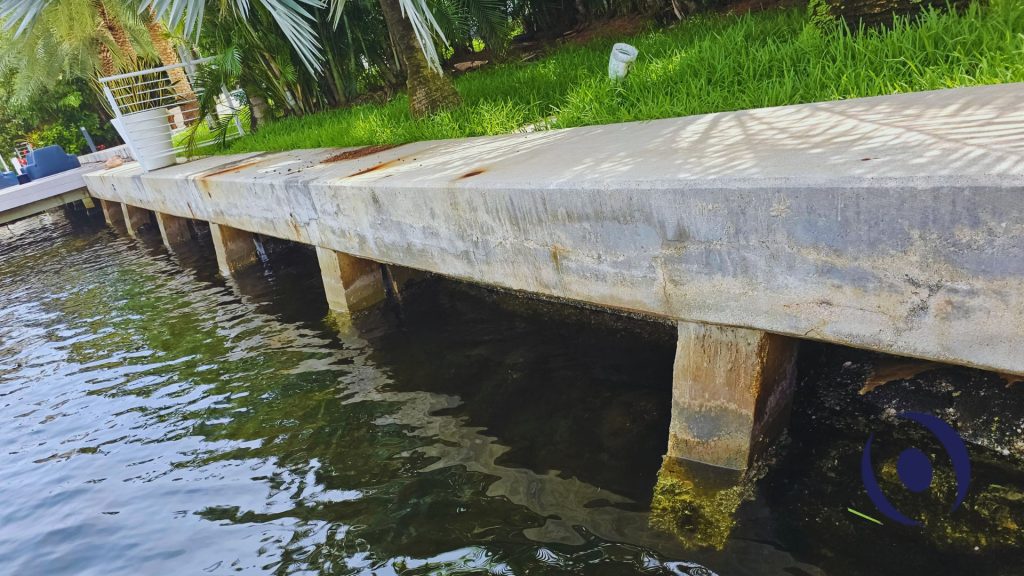
The code also introduces a new term, flood design class, and a new section that extends flood provisions to structures other than buildings, including gazebos, pole barns, platforms, boat shelters and shade structures. For waterfront owners in Broward, Palm Beach and Miami-Dade, that matters. Those structures often sit right next to the water, and they now come with clearer expectations. It is a natural fit for our Seawall and Docks work, where elevation, loads and coastal exposure already shape every decision.
Salt Air Finally Gets Its Own Section
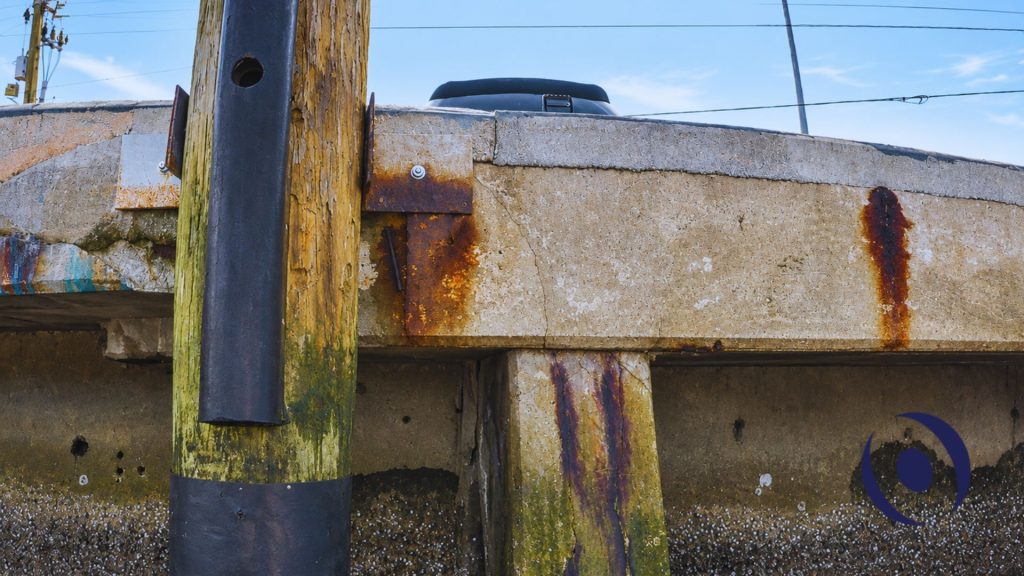
Anyone who has looked closely at an aging connector near the beach knows how aggressive salt air can be. The 9th Edition responds with a brand new Section 1711, Corrosion Resistance in Saltwater Environments. It applies to fasteners, metal connectors and plates located within 3,000 feet of a saltwater coastline, and it introduces a table that assigns stainless steel, enhanced galvanizing or standard galvanizing based on distance from the coast and level of exposure.
This new section is referenced throughout the roofing and framing chapters, so it reaches well beyond oceanfront towers. In much of coastal South Florida, from Pompano Beach to Fort Lauderdale to Boca Raton, a large share of properties sit inside that 3,000-foot band. For our Structural Engineering team, that means specifying connectors with this table in hand from the first round of drawings, rather than catching it during plan review.
Wind, Windows and the Building Envelope
The new edition is built on the 2024 International Building Code, and its wind provisions are now aligned with ASCE 7-22. Simplified design wind pressure tables have been updated to match, references to allowable stress design wind speeds have been removed, and garage and rolling doors are now grouped under the broader term vehicle access doors.
Several envelope details also tightened. Soffits get clearer wind pressure requirements. Hip and ridge asphalt shingles now have their own wind resistance test criteria. The exception that let some exterior doors skip water intrusion testing because they sat under an overhang has been revised, so those doors now need a Limited Water rating and the overhang must extend in more than one direction to qualify.
Separately, recent interpretations of Florida’s threshold building inspection requirements have drawn attention to window and exterior door work on larger buildings. Depending on the scope, modifying these components may call for a structural inspection plan and inspections by a certified Special Inspector, while like-for-like replacements in existing openings that do not touch structural members may not. If a façade or window replacement is on your calendar, a scope review early on can save real time. Our Inspections team can help you figure out where your project lands.
Good News for Renovations and Smaller Spaces
Not every change adds a requirement. Homeowners making a one- or two-family dwelling more accessible get a new permit exemption for work such as ramps with a rise of 48 inches or less, widening interior door openings, and installing grab bars and fixtures. A dollar threshold in the permit issuance section has also been raised from $5,000 to $15,000, which reflects today’s construction costs far better than the old figure did.
Small restaurants and quick-service tenants may benefit too. Food service spaces and quick-transaction tenant spaces with a public access area of 300 square feet or less are no longer required to provide public restrooms. On the residential side, the code now sets a minimum of 190 square feet of habitable space for a dwelling unit and 70 square feet of net floor area for a sleeping unit, which matters for anyone planning micro-units or compact rentals. These are the kinds of layout questions our Architectural Design team works through with clients before a single line is drawn.
Data Centers Enter the Code Book
As computing demand grows across Florida, the code now formally defines a data center as a room or building serving an information technology equipment load greater than 10 kW and 20 watts per square foot of conditioned floor area. Smaller installations are classified as computer rooms, and both fall under a new umbrella term, information technology equipment facilities.
Clear definitions mean clearer expectations for cooling, power distribution and life safety. For our MEP Engineering team, the classification of a space now has a direct bearing on how its systems are designed, whether it is a dedicated server facility or a commercial tenant fitting out a high-density equipment room.
MEP Systems Get a Fresh Rulebook Too
The changes reach well beyond structure and envelope. Alongside the 9th Edition, Florida adopts the 2023 National Electrical Code (NFPA 70-2023), replacing the 2020 edition that has guided electrical design across the state for the past three years. Note that it is the 2023 NEC, not the newer 2026 edition, a detail that catches plenty of people by surprise. Florida also carried forward its own amendments, including exceptions to the NEC’s equipotential bonding rules for pools and spas and state-specific voltage limits for commercial and residential pools, while keeping the emergency shut-off requirement for spas firmly in place.
Outdoor GFCI rules deserve a closer look as well. Industry reports indicate that Florida amended the outdoor GFCI provisions so that listed HVAC equipment does not require GFCI protection, a welcome fix for the nuisance tripping that has frustrated owners of outdoor condensing units. GFCI protection still applies to other outdoor outlets, including those serving garages, accessory buildings and boathouses.
The Energy Conservation volume may be where designers feel the biggest shift. The 9th Edition brings sweeping revisions to the building thermal envelope, HVAC, lighting, renewable energy and load management, and it restructures the additional efficiency credit requirements in Section C406. One glazing change is especially easy to miss: Supplement No. 1 revises how the prescriptive solar heat gain coefficient (SHGC) and U-factor values are determined under Table C402.4, which can change which window and door products meet the prescriptive path.
Climate zones matter here too. Although the energy tables list Climate Zones 1 through 8, only two apply in Florida. Climate Zone 1A covers Broward, Miami-Dade, Palm Beach, Monroe, Collier, Hendry and Lee counties, and Climate Zone 2A covers the rest of the state. For most of our South Florida clients, that means Zone 1A from the very first sketch. Our MEP Engineering team works side by side with our architects so that power layouts, HVAC sizing and envelope performance all line up with the new requirements before a set ever reaches plan review.
Busier Job Sites, Quieter Neighbors
Chapter 33 brings new expectations to active construction sites. A new section requires a site safety plan and a site safety director who performs daily inspections, and another limits vibration from pile driving, deep foundations and similar work to a peak particle velocity of 0.5 inches per second. In dense neighborhoods and along the coast, where older structures often sit close to new foundations, that limit is worth planning around during foundation design rather than discovering during construction.
How NOHMIS Is Preparing
NOHMIS provides full-service Architecture, Structural & MEP Engineering, along with inspections and waterfront design, so code changes like these touch nearly everything we do. Our team has been reviewing the 9th Edition provisions across disciplines and building them into how we prepare and check permit sets. When a project spans the transition date, we help clients understand which edition applies and what it means for their schedule, budget and drawings.
Your Next Move Before the Deadline
The 9th Edition is not a reason to panic, but it is a reason to plan. If your project is near permit-ready, a quick conversation about timing could keep it on the current code. If you are just starting out, designing to the new edition from day one avoids costly redesigns later. And if you own coastal property, flood documentation and corrosion-resistant connections deserve a place on your checklist now. The calendar will not wait, but a prepared design team can keep your project moving.
Ready to talk through your project? Reach out to NOHMIS and our team will help you make sense of what the new code means for you. Learn more at www.nohmis.com.
Contact:
NOHMIS Design, Engineering & Inspections
2195 N. Powerline Rd, Suite 2
Pompano Beach, FL 33069
+1 954-591-8361
Services@NOHMIS.com
www.nohmis.com
Disclaimer: This article is for general information only and does not replace the Florida Building Code or guidance from your local building department. Always confirm requirements for your specific project with a licensed design professional and the authority having jurisdiction.
References
- Florida Building Commission, Analysis of Changes for the 9th Edition (2026) Florida Building Code, Building:
https://www.floridabuilding.org/fbc/thecode/2026_Code_Development/Analysis_Code_Changes/Analysis_of_changes_9th_Edition-2026-FBC-Building.pdf - National Law Review, New Florida Building Code Edition Takes Effect Dec. 31, 2026: Permitting Implications and Key Changes:
https://natlawreview.com/article/new-florida-building-code-edition-takes-effect-dec-31-2026-permitting-implications - Florida Building Commission, Supplement No. 1 to the 9th Edition (2026) Florida Building Code, approved October 13, 2026:
https://www.floridabuilding.org/fbc/thecode/2026_Code_Development/Supplement_1_to_the_9th_Edition_of_the_FBC.pdf - Florida Building Commission, Electrical Technical Advisory Committee Minutes, October 1, 2025: https://www.floridabuilding.org/fbc/commission/FBC_1025/Committee_Reports/Electrical_Minutes_10-1-2025.pdf
- Electrical Code Connection, 9th Edition of the Florida Building Code 2026: https://electricalcodeconnection.com/9th-edition-of-the-florida-building-code-2026/