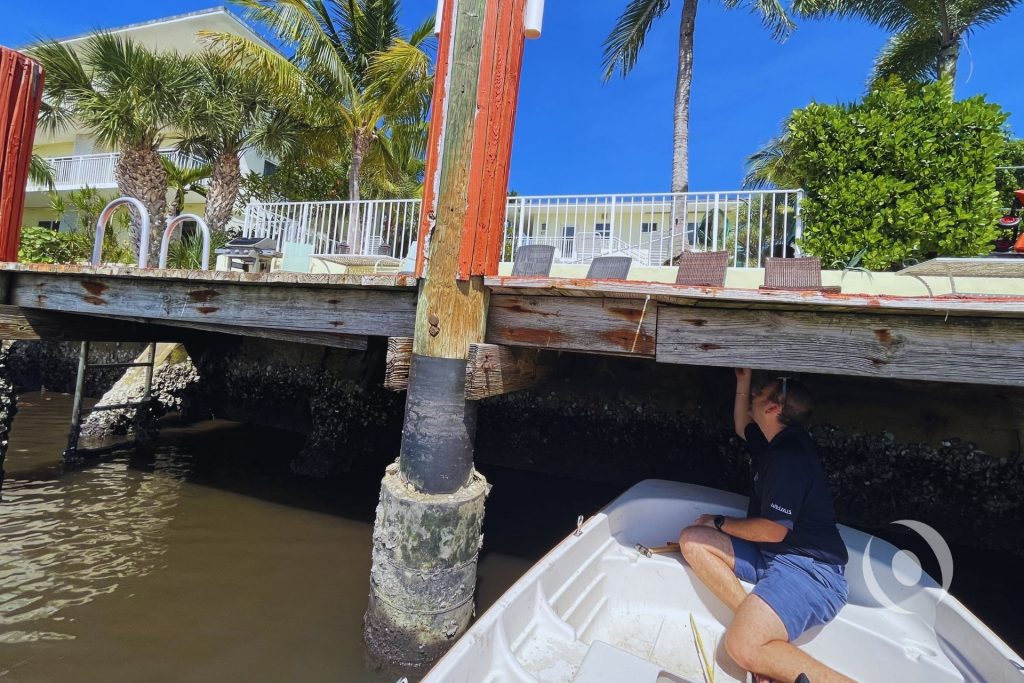
Coastal Seawall Structural Rehabilitation & Wood Dock Reconstruction
Project: Structural Seawall Repair & Complete Dock Reconstruction for a Multi-Unit Waterfront Residential Complex
Location: Boynton Beach, Florida | North Ocean Boulevard
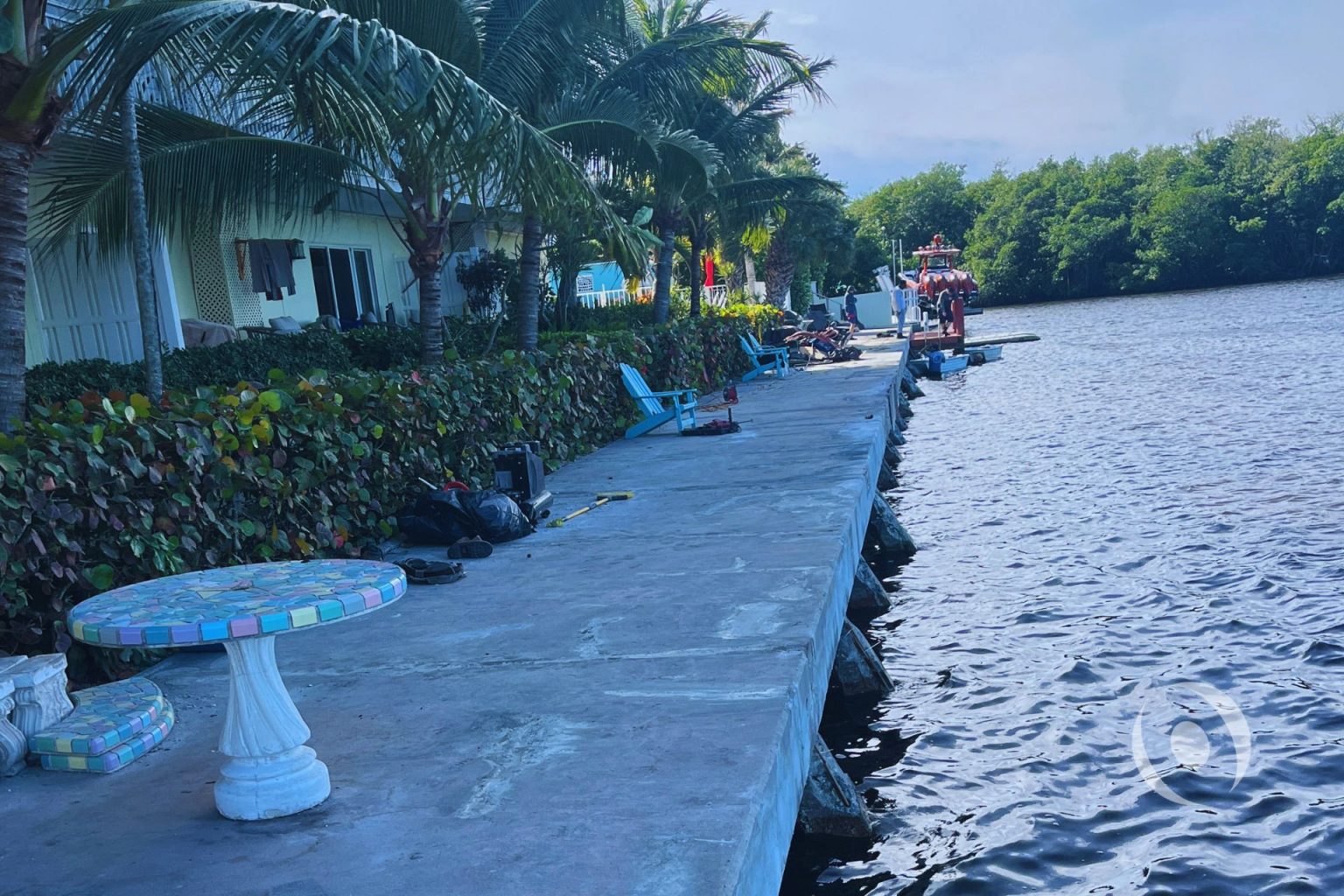
Size: Multi-unit residential complex spanning 1-story, 2-story, and 3-story buildings with a shared waterfront seawall and attached wood dock along approximately 210 linear feet of coastal frontage
A deteriorating seawall along one of Palm Beach County’s most active coastal corridors needed more than surface repairs. It needed a full structural engineering solution designed to last.
Engineered to Fix the Cause, Not Just the Crack
The goal was not to patch visible damage. It was to assess the true structural condition of every wall component, design repairs that addressed root causes rather than symptoms, and deliver a permit-ready engineering set that a marine construction crew could execute in the field with complete clarity. NOHMIS served as engineer of record for both the seawall structural rehabilitation and the complete dock reconstruction, covering all repair elevations, structural details, and connection specifications across the entire scope.
Every Component Gets What It Actually Needs
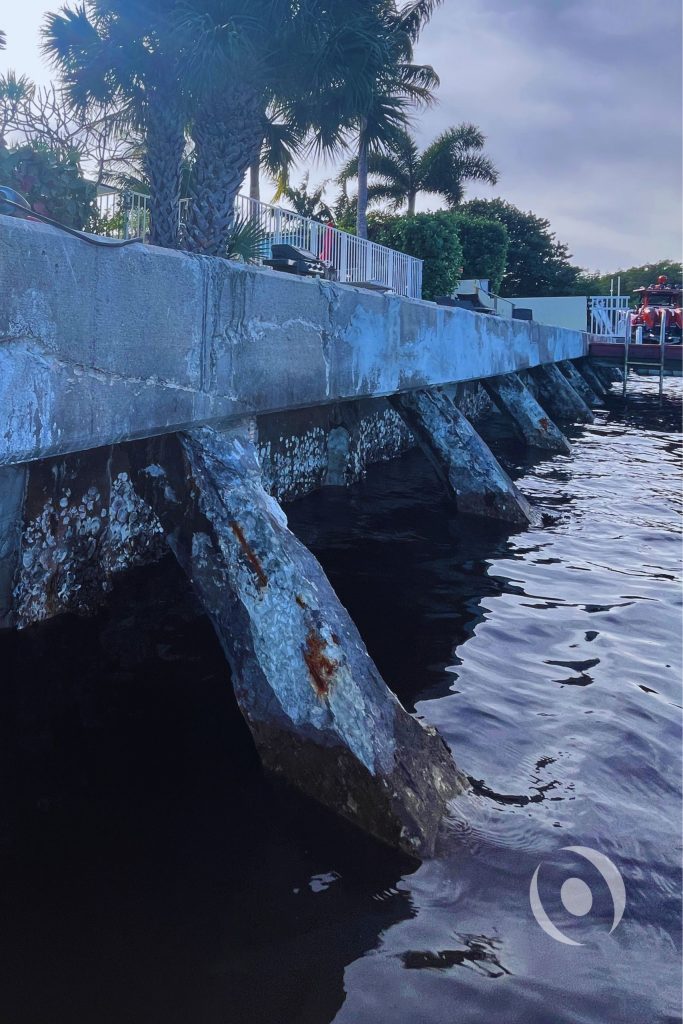
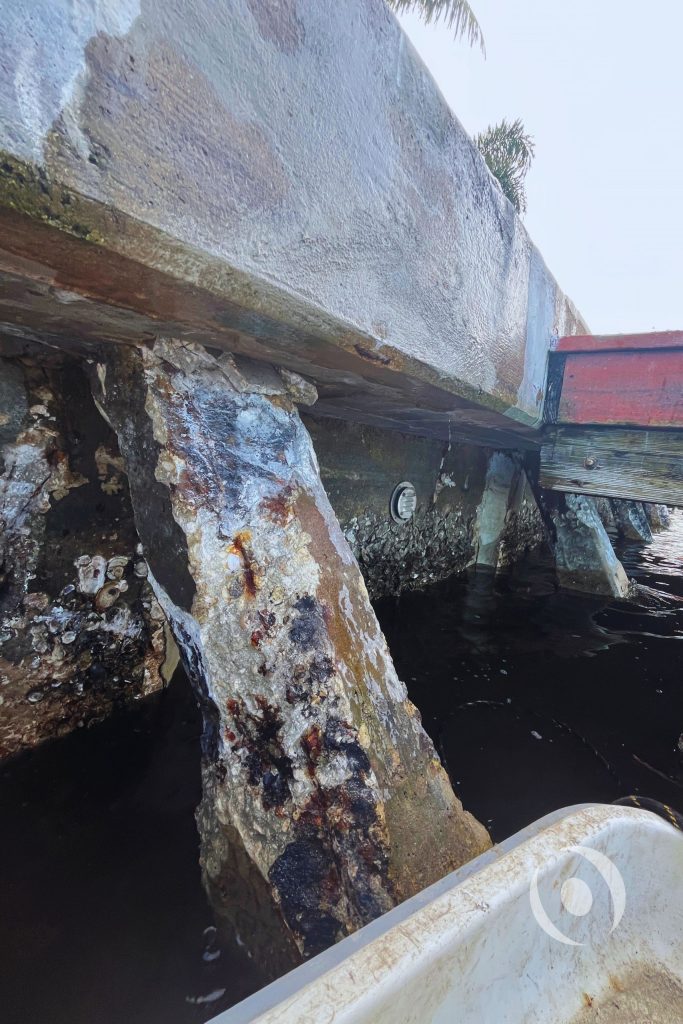
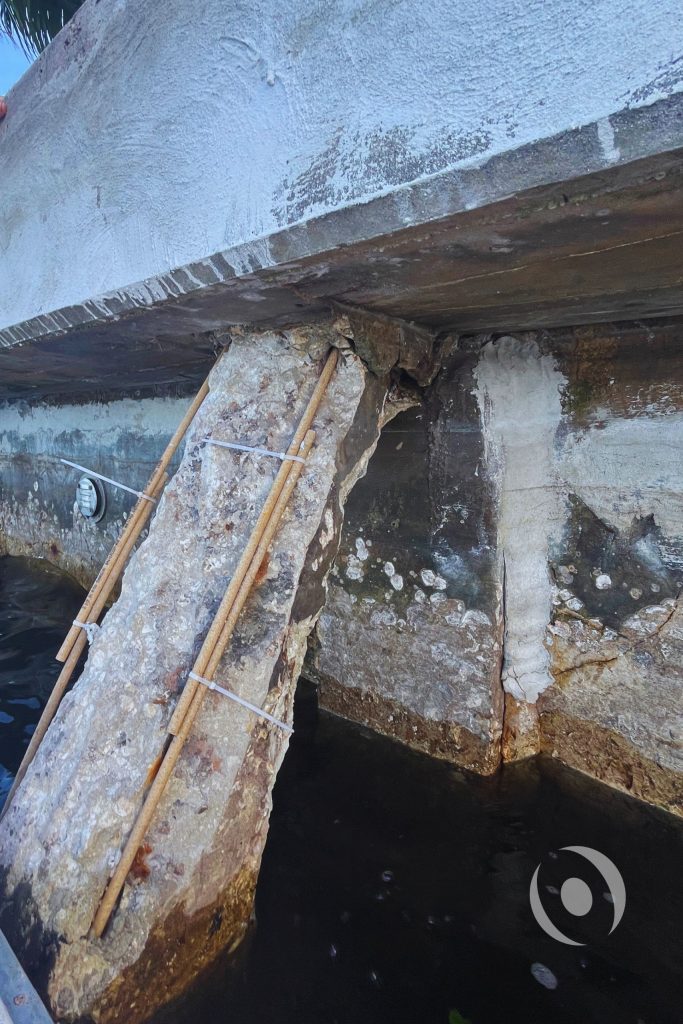
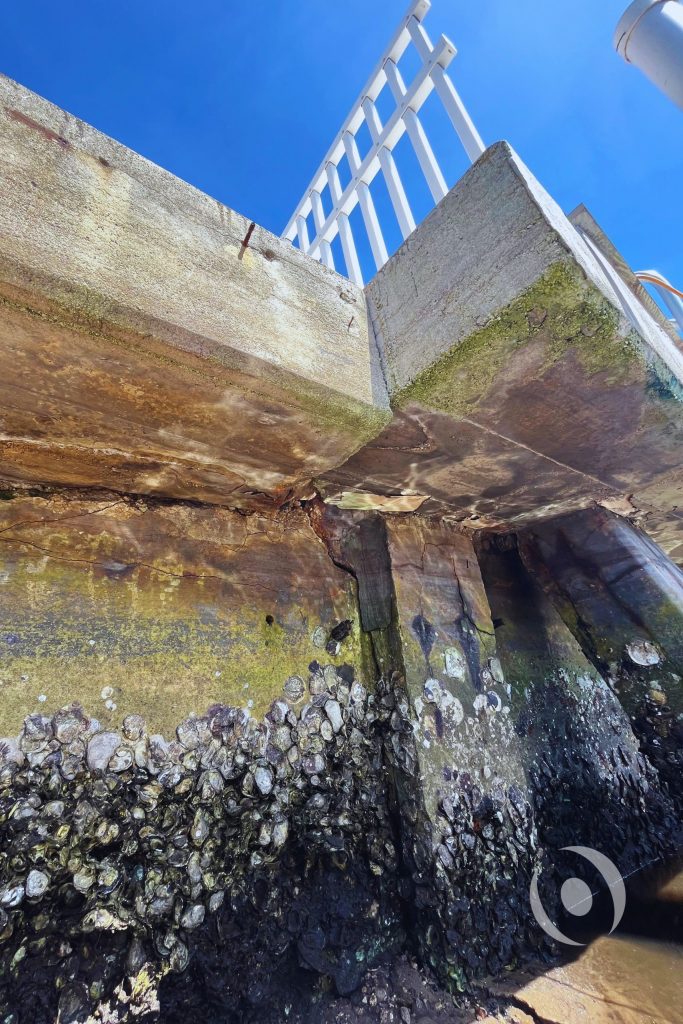
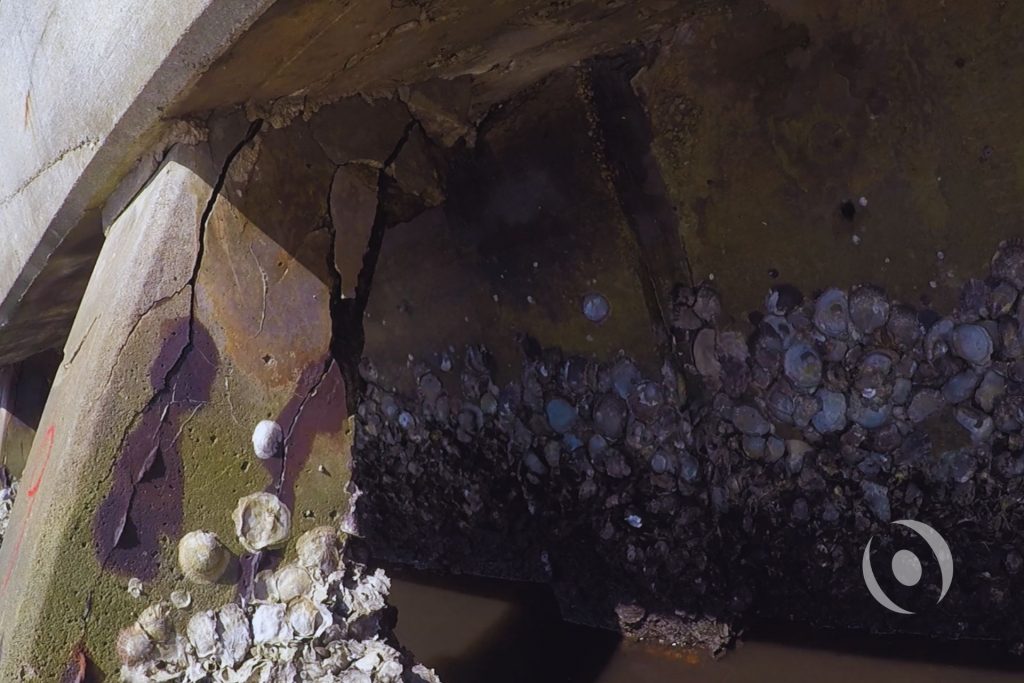
Every component along the 210-linear-foot wall received a repair specification matched to its actual condition. The seawall cap, precast concrete panels, king piles, and batter piles were each evaluated and assigned targeted repair procedures.
Surface cracking and deterioration were addressed with bonding agent application and high-performance structural repair mortar. Where rust was already protruding, concrete was removed down to sound material, reinforcing steel was cleaned, treated with anti-corrosion coating, and new concrete was formed and sealed against future marine water intrusion. Panels with significant spalling were restored using Sikagrout-500 Aqua, a marine-grade material rated for submerged and tidal zone applications. Any panel where deterioration exceeded the structural centroid was designated for full replacement. That threshold-based decision is what separates a repair plan with real engineering behind it from one that simply restores the surface of a failing structure.
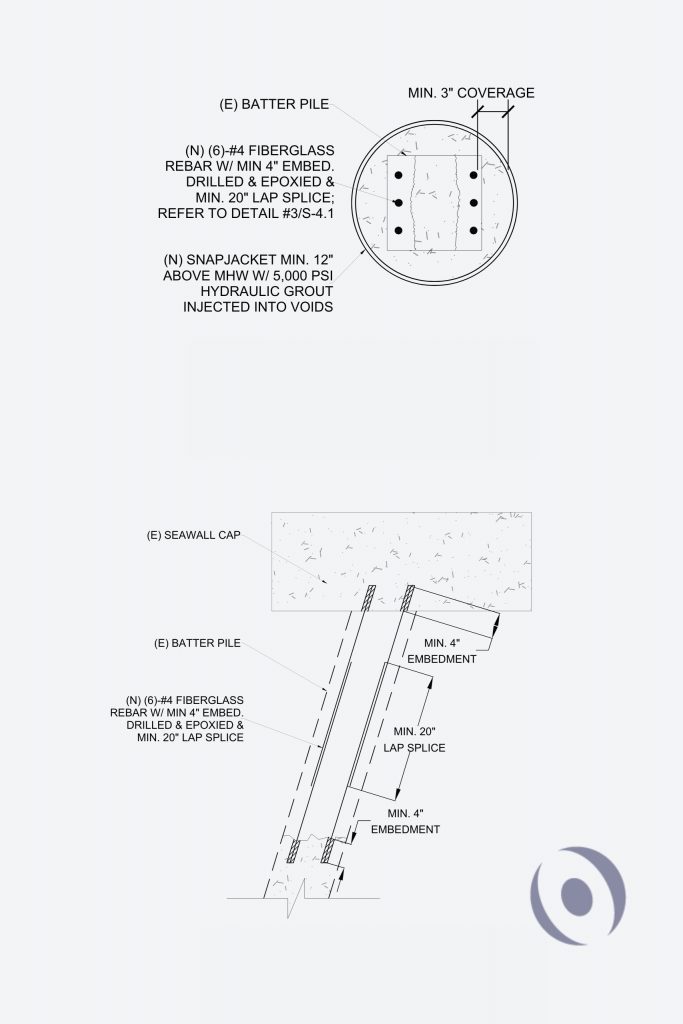
For the batter piles, the highest-stakes element of the seawall scope, NOHMIS designed a snap jacket restoration system with 5,000 PSI hydraulic grout injected into structural voids, fiberglass rebar epoxied at minimum 4-inch embedment depth, and a minimum 20-inch lap splice to restore full load transfer continuity. Sections requiring deeper intervention were designed for 9,000 PSI grout. A 45-degree bevel splash zone compound was specified at the top of each jacket to protect the most exposure-vulnerable point of the pile.
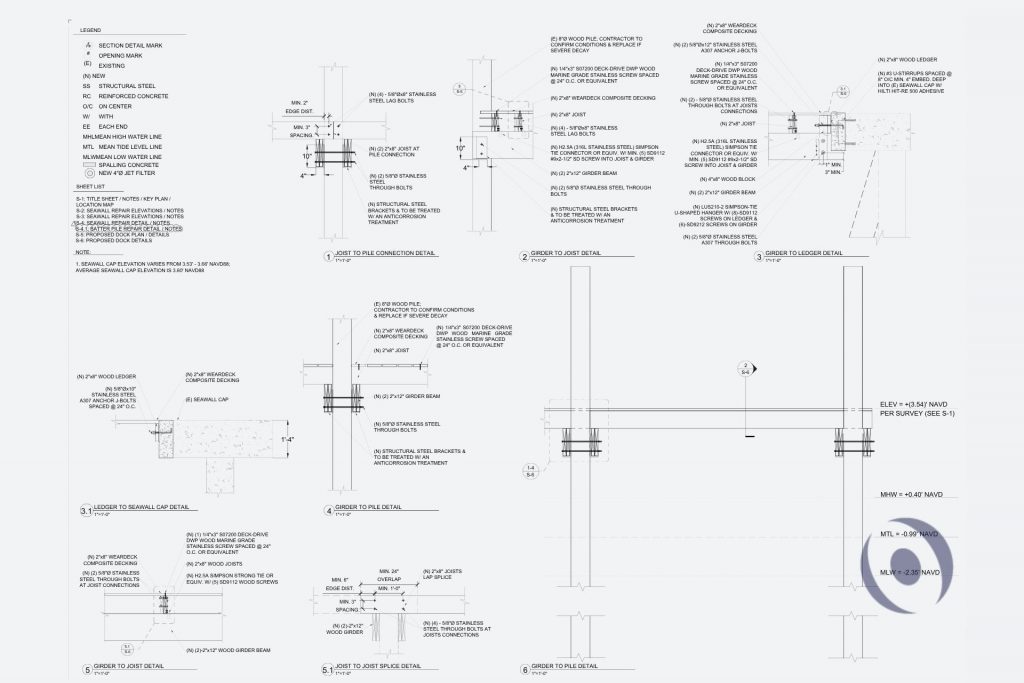
Approximately 22 new 4-inch jet filters were core-drilled and installed at 3 to 6 inches above mean tide level, spaced at a maximum of 10 feet on center. Hydrostatic pressure buildup behind a seawall is one of the leading causes of long-term coastal structural failure in South Florida. Building pressure relief directly into the repair plan means the rehabilitated wall performs as a complete, integrated system from day one. All specifications were produced in compliance with Florida Building Code 2020, ASCE 7-16, and ACI 318, with concrete designed to 5,000 PSI per ASTM C989.
The Dock Rebuilt. The Foundation Kept.
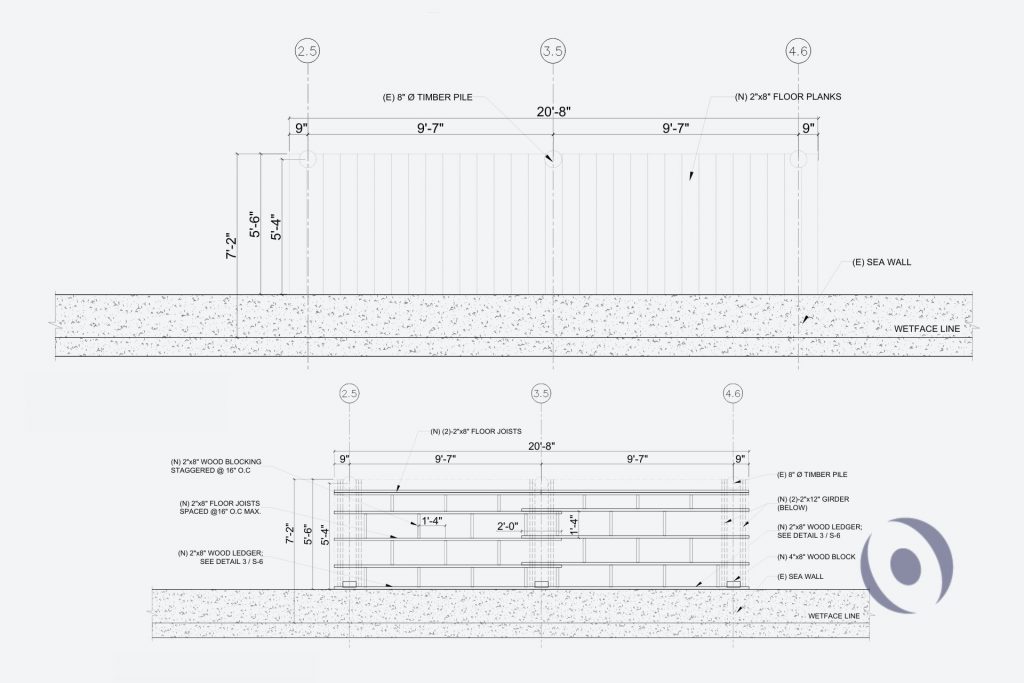
The existing 8-inch timber piles were inspected and confirmed structurally sound. Rather than replacing them, NOHMIS designed a complete new framing system around the existing pile foundation. The reconstructed dock spans approximately 20 feet 8 inches in width, framed with doubled 2×12 Southern Yellow Pine girder beams, 2×8 floor joists at 16 inches on center, and finished with Weardeck composite decking rated for marine environments. Every structural connection was specified in marine-grade 316L stainless steel. The ledger was anchored into the rehabilitated seawall cap using Hilti HIT-RE 500 chemical adhesive with epoxy-set U-stirrups, creating one fully engineered connection between the dock and the seawall.
Designing both scopes under one engineering roof meant the interface between the wall and the dock was resolved as a single system with no coordination gaps, giving contractors one permit set and one point of contact for special inspections.
Stronger Shoreline. Stronger Property. Stronger Community.
A failed seawall on a shared waterfront property in Boynton Beach does not affect only the buildings directly behind it. It threatens adjacent properties, compromises shoreline integrity, and creates liability for every stakeholder on the site.
The structural rehabilitation delivered here extends the service life of the seawall, returns the dock to full permitted use, and produces a documented engineering record that strengthens the long-term value of the entire property. For HOA boards and property managers, it is defensible documentation. For general contractors and marine construction firms across Palm Beach County and South Florida, it is a clear example of what permit-ready seawall structural engineering looks like when it is done completely. For real estate professionals, it transforms one of the most common sources of waterfront due diligence uncertainty into a fully documented, engineered asset.
A waterfront property is only as strong as the structure holding it to the water. This one now has the engineering to prove it.