Luxury Two-Story Addition & Full Interior Renovation
Some homes reach a point where adding a room is no longer enough. This was one of them. A luxury single-story residence on nearly an acre in one of South Florida’s most sought-after communities needed more than square footage. It needed a home that matched the vision of the people living in it. A second floor with a private bedroom suite and media room. A ground floor with a gym, sauna, and a courtyard designed for outdoor living. A new exterior that read as a cohesive, considered piece of architecture rather than a house with additions. NOHMIS was brought in to design all of it, from the foundation system to the roofline, across every discipline, as one complete project. What came out the other side was a 7,059-square-foot residence, up from 4,153, rebuilt to the standard the property always deserved.
Not Just More Space. An Entirely Different Home
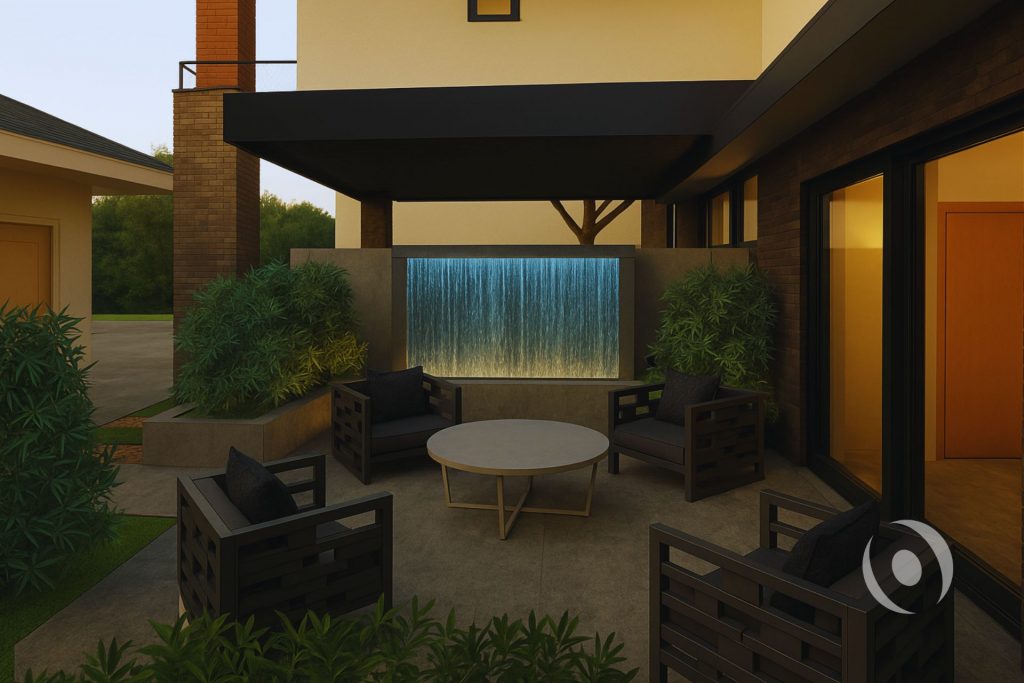
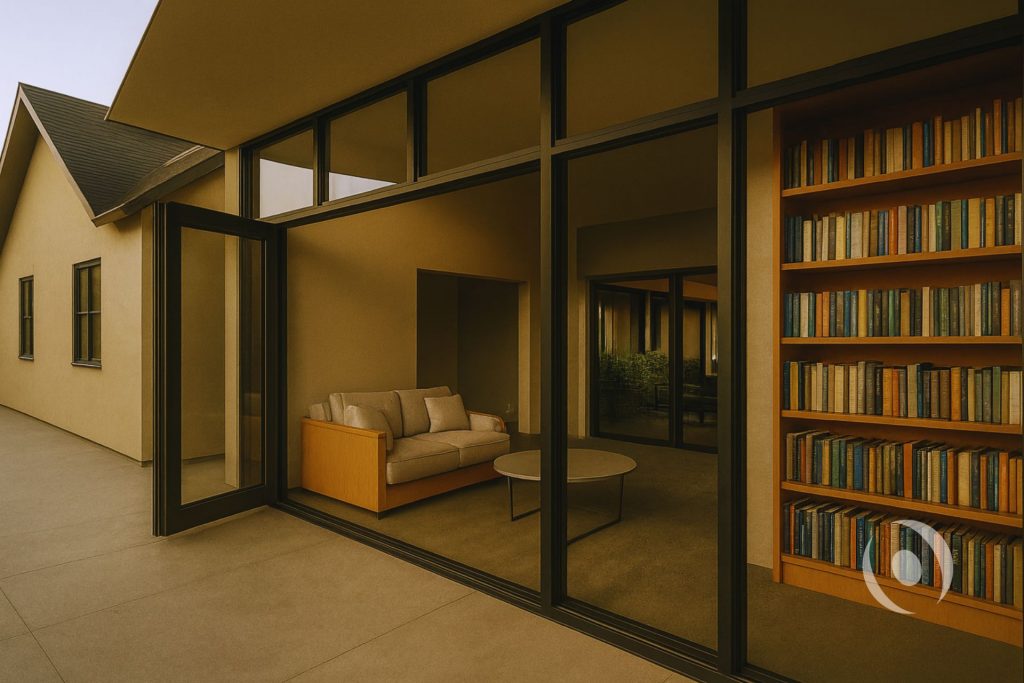
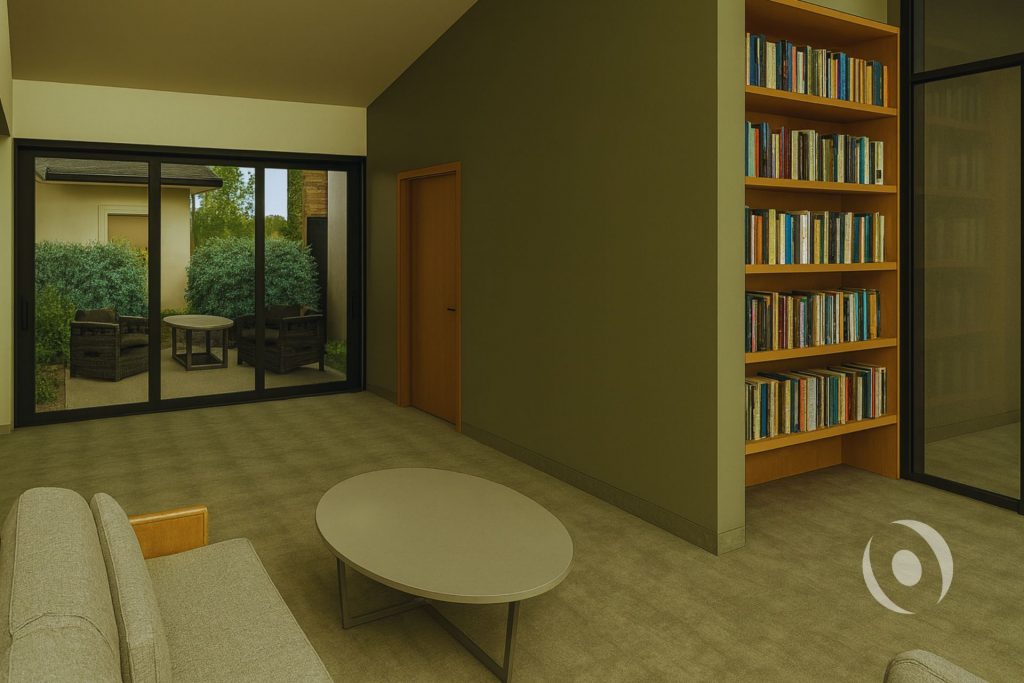
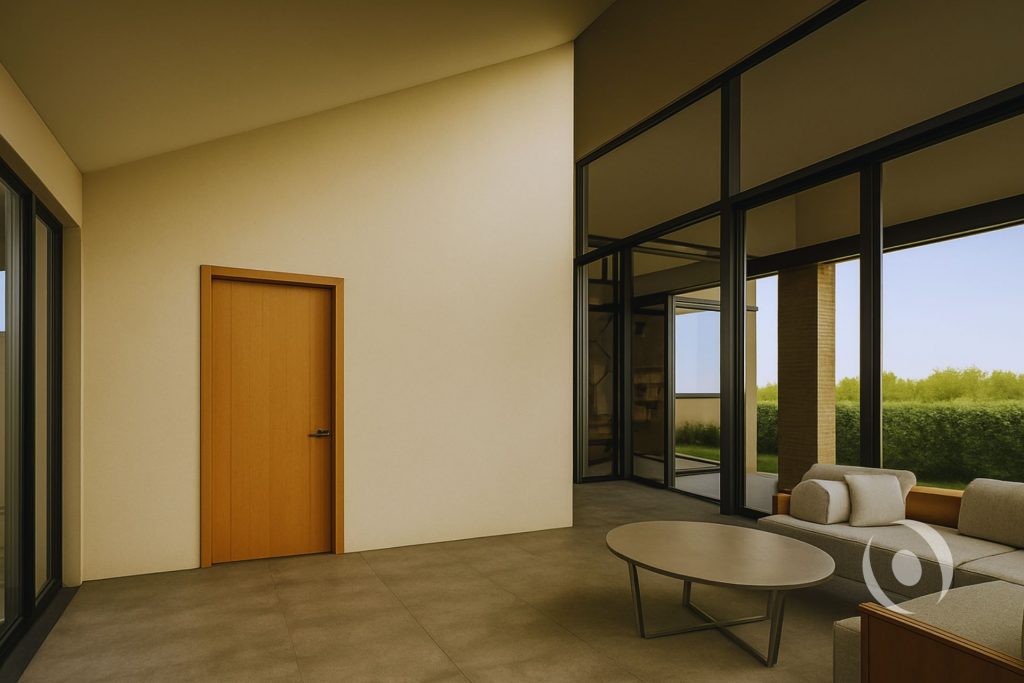
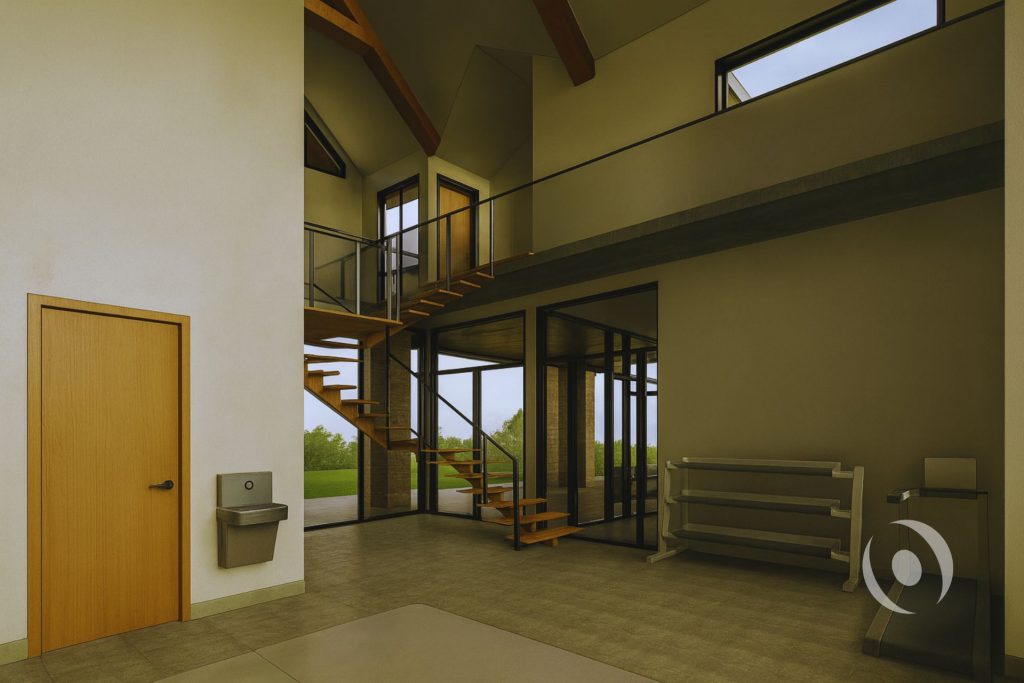
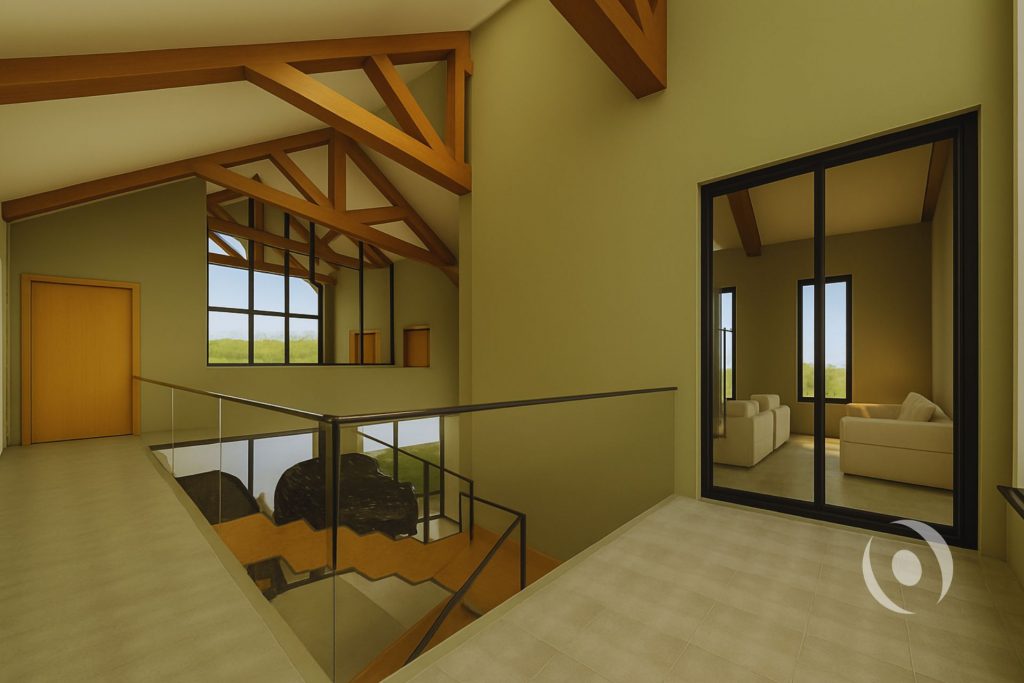
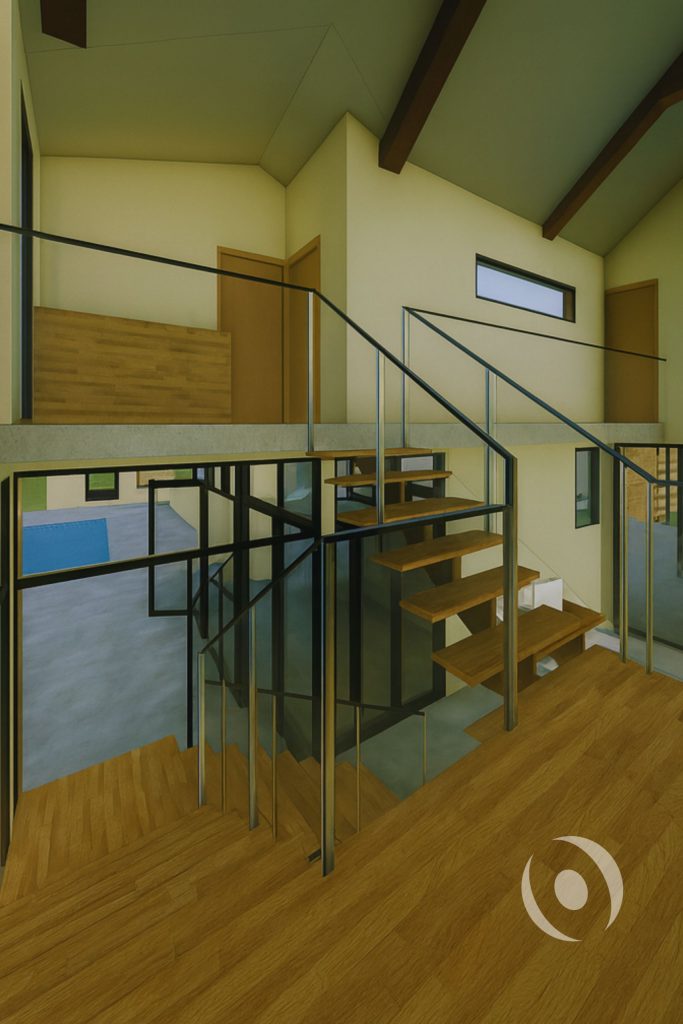
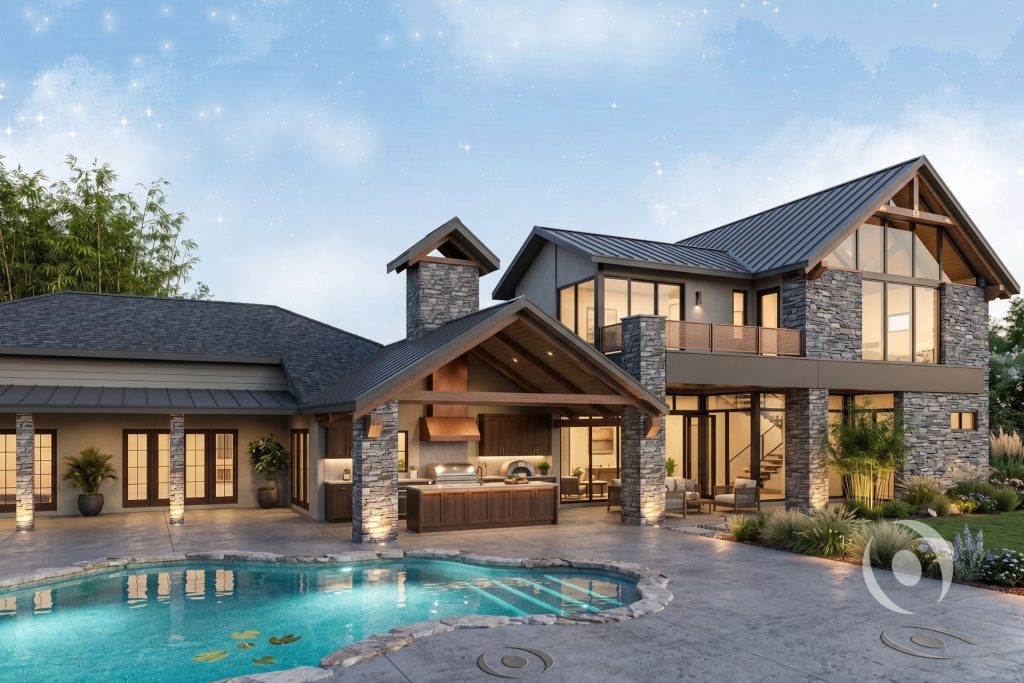
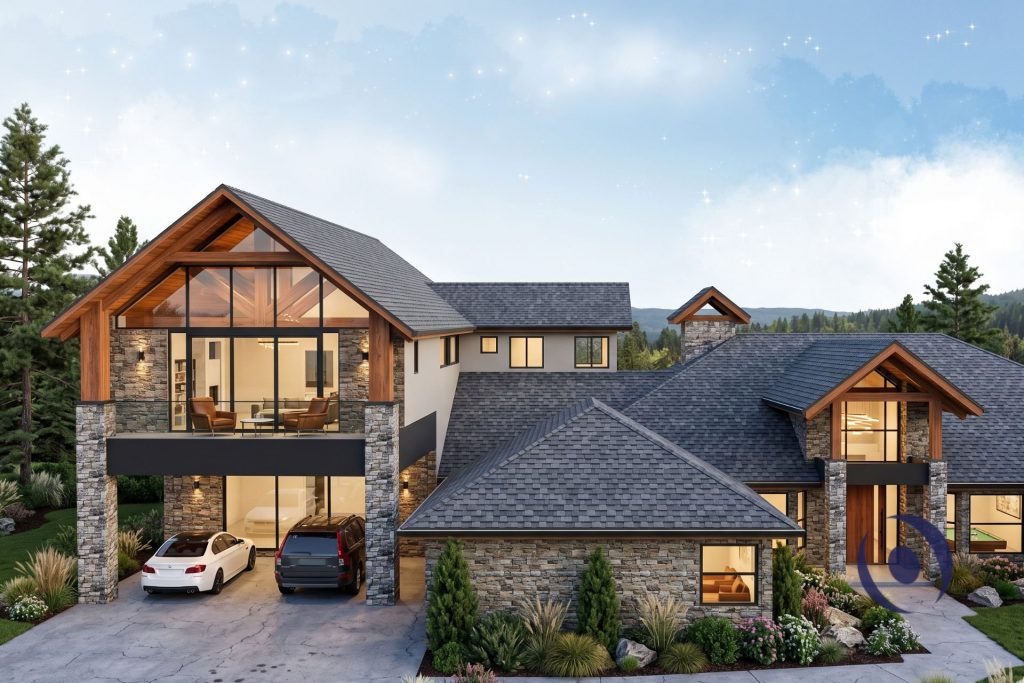
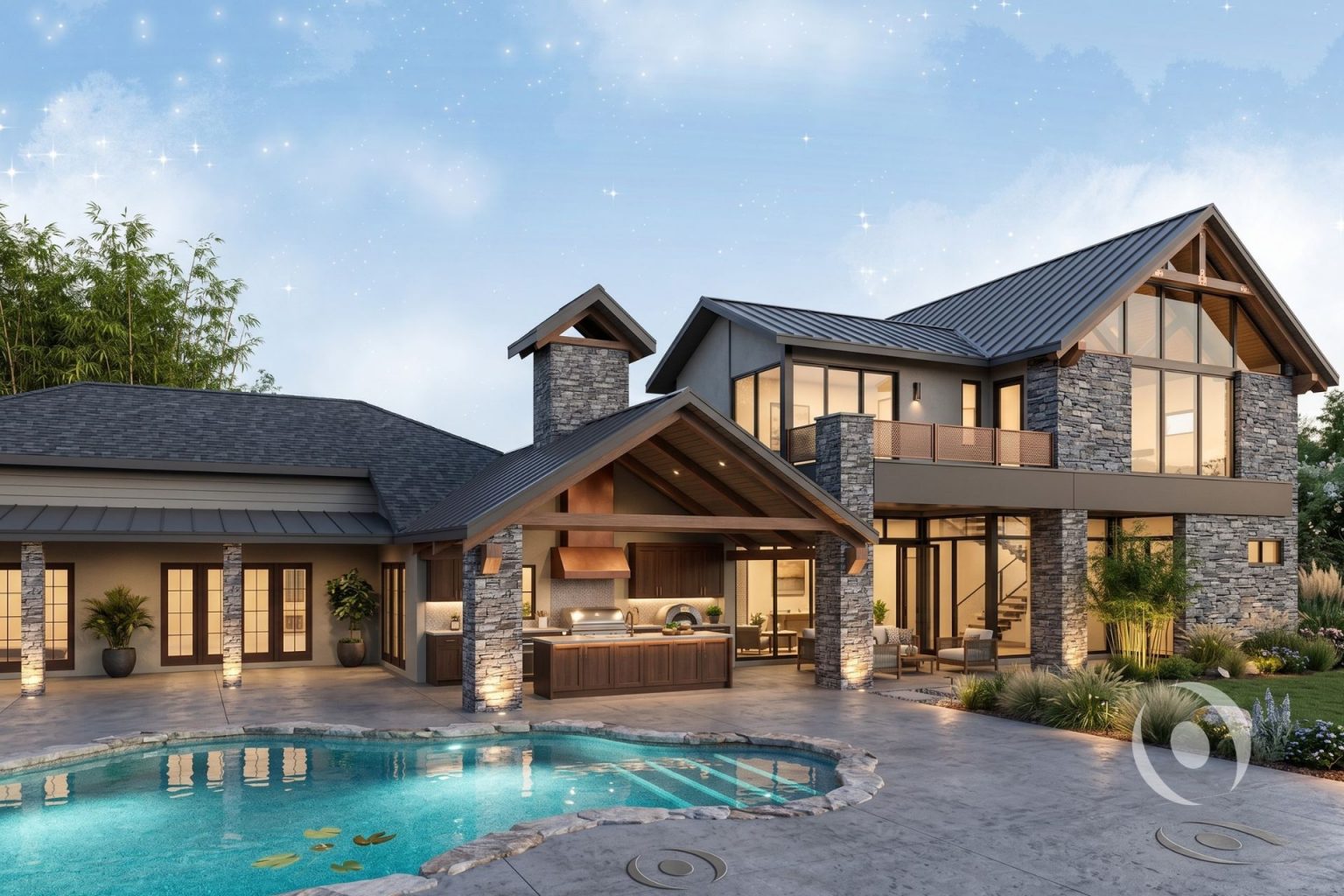
The addition introduced a full second floor and an expanded ground floor plan that reads more like a private resort than a standard residential renovation. On the first floor, a dedicated gym, sauna, and cabana bath sit alongside a Florida room that opens to a covered terrace, a courtyard anchored by a custom waterfall fountain, and an outdoor kitchen finished under a port cochere framed with exposed Brazilian Teak beams and stone columns. A new pool and 6,048 square feet of new paver driveway extend the luxury to every corner of the nearly one-acre site. Upstairs, the second floor was designed with the same intention: a full bedroom suite, a media room, a private lounge and snack bar, an office with a balcony, and a dedicated bath suite with a powder room. Every space was planned to function at the level the design suggested.
The exterior transformation was just as deliberate. Five distinct cladding materials were applied across all four facades: charcoal gray flat tile roof, Old Louisville Tudor brick veneer, Sierra Blue stone veneer, black ACM panels, and Cheshire Mahogany wood cladding with exposed Brazilian Teak beams throughout. The combination was chosen to give the home a layered, crafted character that feels designed from a single point of view rather than assembled over time. 3D design renders and a full materials elevation board were produced for city and ARB approval so the vision was locked in before a single wall went up. Inside, ceiling heights range from 9.5 feet in the private rooms to a 25-foot double-height volume at the foyer, a gesture that announces the scale of the home the moment you step through the door.
Three Disciplines. One Team. No Surprises On Site.
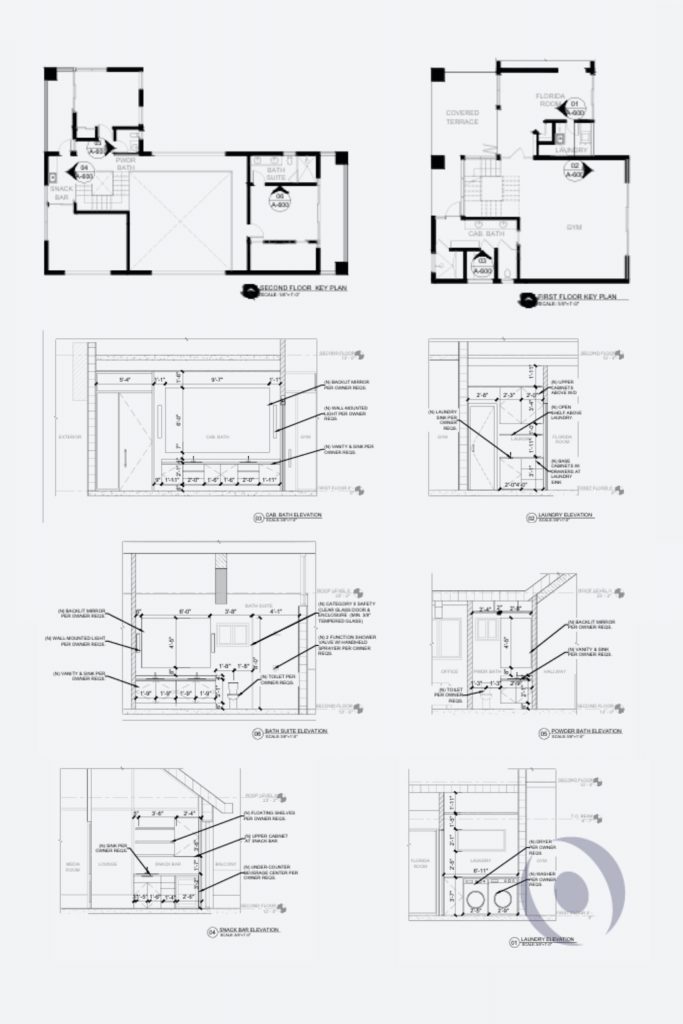
The architectural layout was established first, and everything else was engineered around it. Column locations were confirmed against the floor plan before structural sizing began. Duct routing and plumbing lines were coordinated against the framing plan before either was placed on a drawing. The result is a permit set where architecture, structural engineering, and MEP reference each other across disciplines without conflict, because they were designed by one team at the same table.
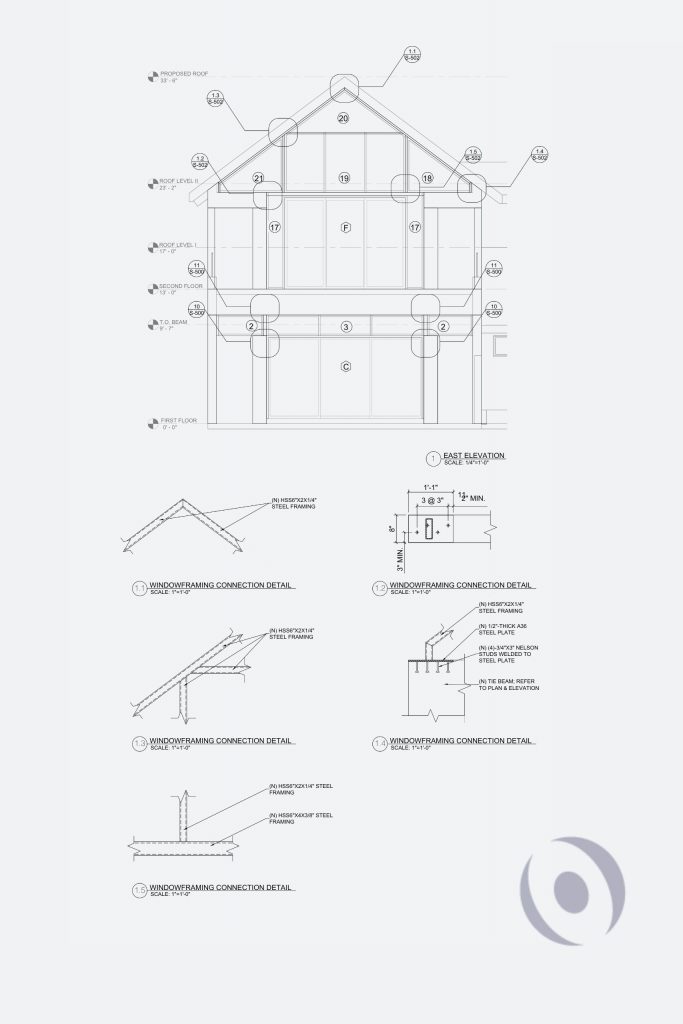
Structurally, the project was engineered to withstand 170-mph ultimate wind speed, the applicable standard for South Florida’s coastal exposure, and that requirement shaped every structural decision from the foundation to the roof anchors. The foundation design presented an early challenge when a geotechnical investigation found tree roots at the addition footprint, creating uncertainty about the appropriate foundation type. Rather than leaving that question open for the contractor to resolve in the field, both options were fully engineered and included in the permit set simultaneously. A shallow foundation system and a helical pile alternative were drawn, calculated, and detailed side by side. It is the kind of decision that adds almost nothing to the design phase but can save weeks of delays and tens of thousands of dollars once a crew is already mobilized on site. The structural package also addressed an existing tie beam in the garage that required reinforcement before the new framing above it could proceed, and the second floor framing uses pressure-treated wood joists with steel beams at the longer spans, all tied back to pre-engineered roof trusses with connection hardware specified to the product number.
The MEP scope was sized to match the ambition of the design. The electrical service was upgraded to 600 amps to support the expanded plan, with FPL coordination completed and a new 250-amp panel added for the addition. Three new HVAC systems were designed and added, bringing 10 tons of new cooling capacity into the building across five zones sized to the actual ceiling heights and thermal loads of each space, with two existing systems remaining in service. A 25-foot foyer ceiling in South Florida’s climate is not a feature you can cool with a standard residential unit, so the zoning strategy was designed around the specific volumes and occupancy patterns of each new space rather than applied as a formula. The plumbing design covers every fixture across both floors, from the ground-floor sauna and outdoor kitchen to the second-floor bathroom suite and snack bar, with a roof drainage system calculated to handle South Florida’s 100-year rainfall standard at 126 gallons per minute.
The two alternative foundation systems are a good example of how the disciplines informed each other throughout. The geotechnical finding affected the structural design, which affected the architectural column layout, which affected the MEP routing below the slab. All of it was resolved in the drawings before a permit was submitted.
The Drawings Held Up. So Did the Build.
The complete permit set was delivered signed and sealed by Arthur Molinari, AIA as Architect of Record under FL AR100808, and Joseph Simhon, P.E. as Engineer of Record under FL PE 86388, produced to Florida Building Code 2023 Eighth Edition standards. Every sheet across all three disciplines cross-references the others, so a contractor working from any one discipline can immediately locate the corresponding detail in another without hunting through separate packages from separate firms.
A luxury residence that had reached its limit at 4,153 square feet was redesigned, re-engineered, and expanded to 7,059 square feet, engineered to 170-mph wind standards and fitted with 10 tons of new cooling capacity, all built to perform in South Florida’s climate for decades. The architecture set the vision. The structure made it buildable. The systems made it livable. All three were designed as one, and it shows in every room.