Precast Concrete Seawall Replacement
Project: Seawall Full Replacement
Location: Miami Beach, Florida – Private canal off Intracoastal
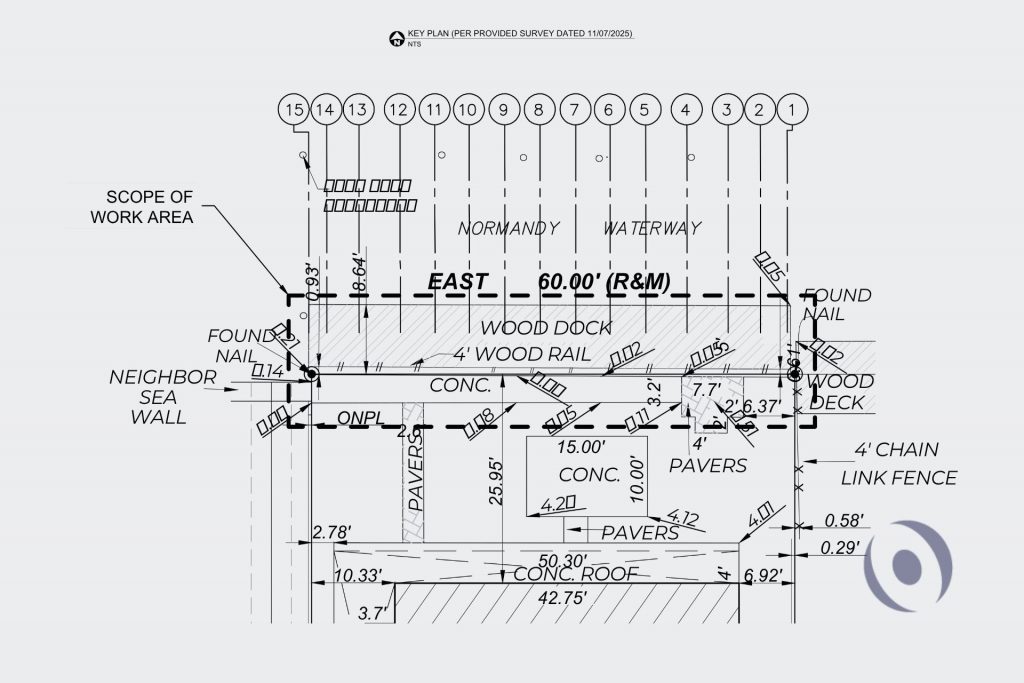
Size: 60 linear feet
What the Tide Left Behind
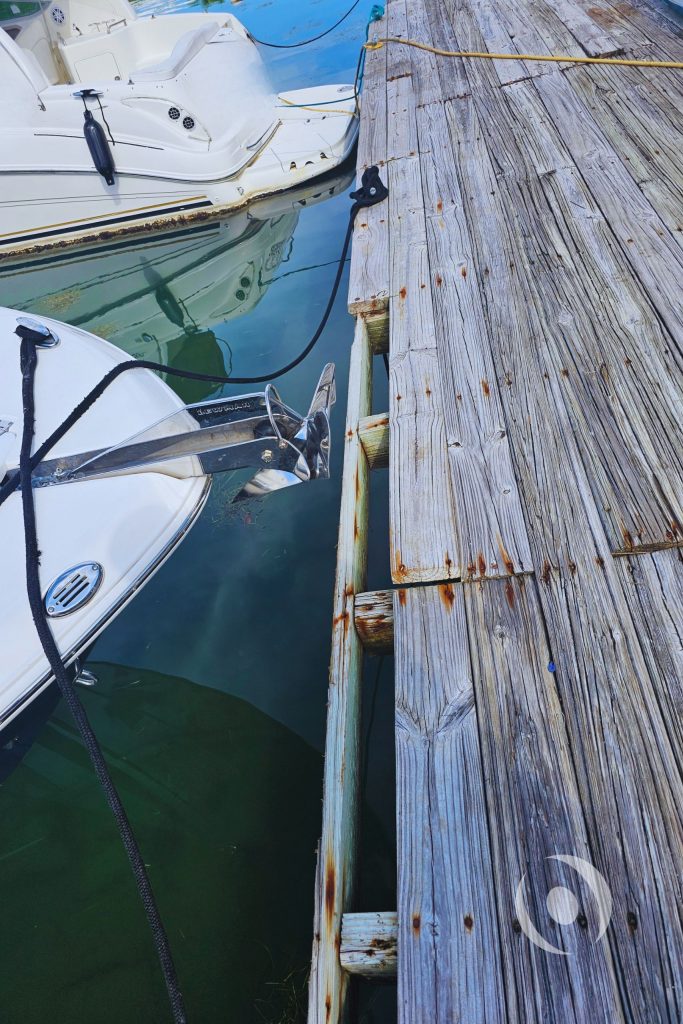
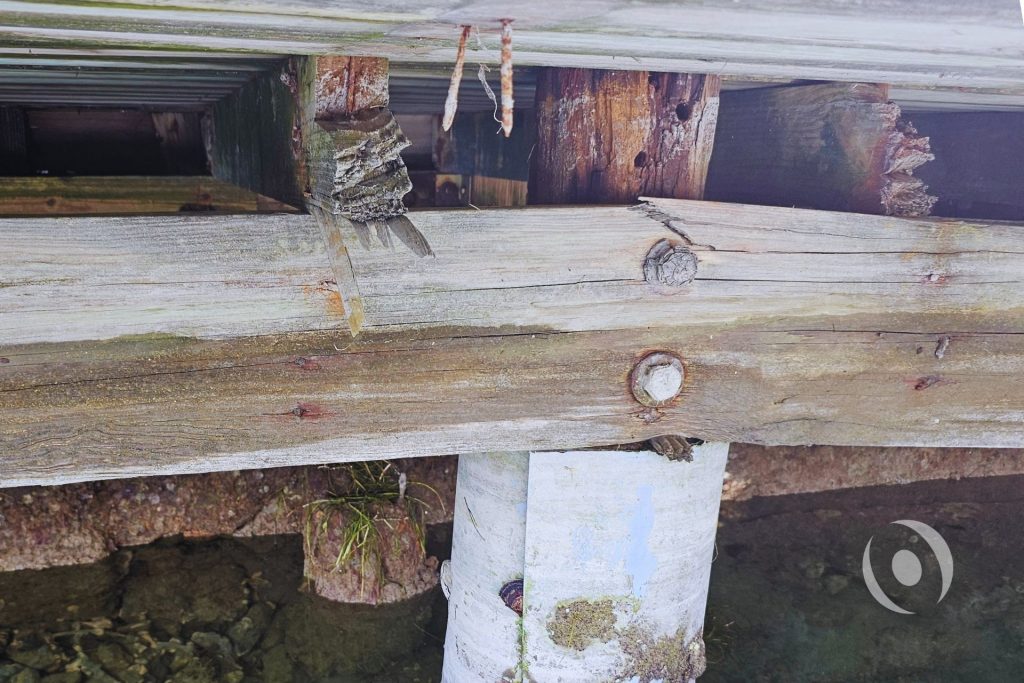
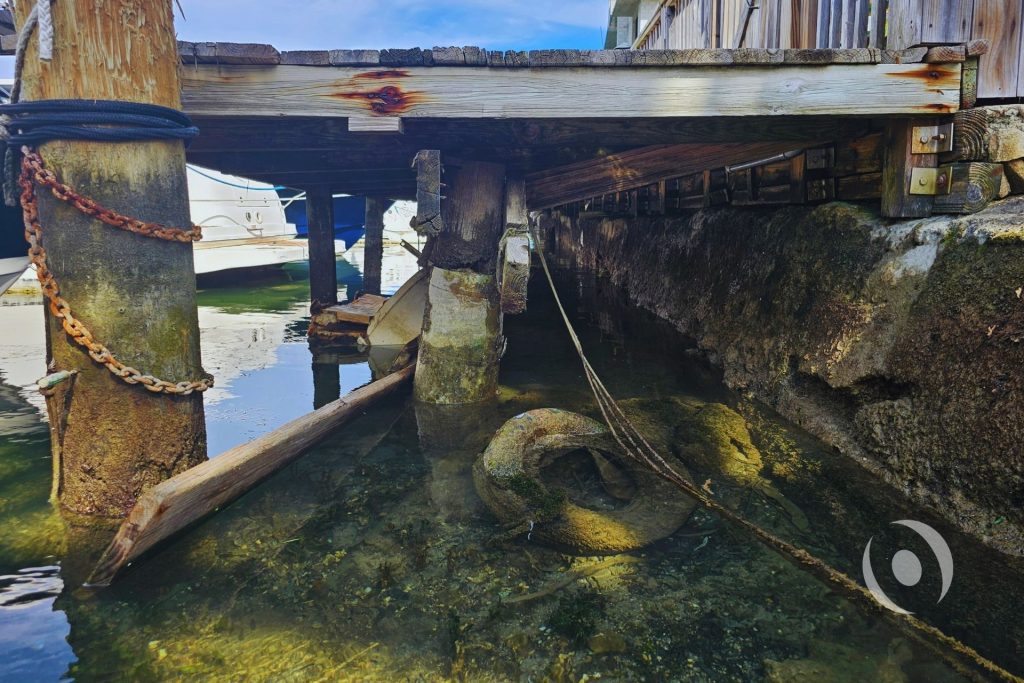
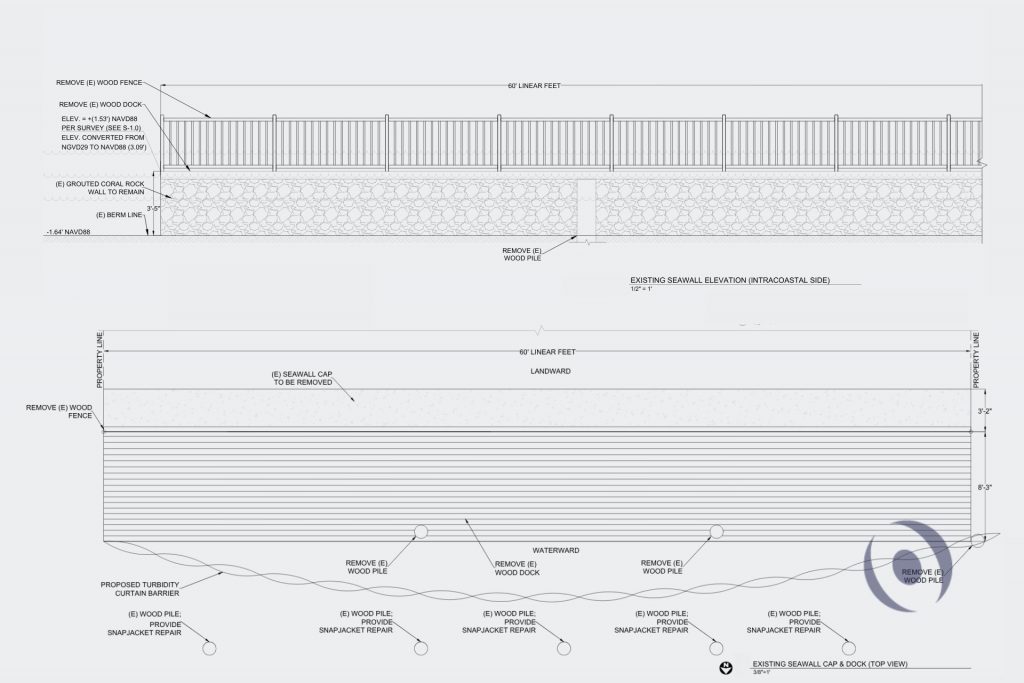
Waterfront properties in South Florida don’t always reveal their vulnerabilities on the surface. This Miami Beach canal property looked like any other residential waterfront, until our team conducted a full structural seawall inspection and found the real picture. The existing grouted coral rock gravity wall had been quietly deteriorating for years. The wall face was riddled with deep erosion voids at and below the waterline. The seawall cap was cracked, displaced, and actively separating. The wood dock was rotting through, and five timber piles showed significant marine decay with measurable cross-sectional loss below the waterline. Most critically, no toe protection remained at the base, and the foundation was undermining with every tidal cycle, accelerating the structure’s failure with every storm season.
The Only Fix Worth Making
After the inspection, the path forward was clear. Patch repairs on a wall this far gone would have cost nearly as much as a full replacement, delivered a fraction of the lifespan, and left every structural risk untouched. We gave the owner an honest assessment and a direct recommendation: a complete precast concrete seawall replacement, built right the first time. Any coastal construction along a Miami Beach canal also requires coordination with Miami-Dade DERM (Department of Environmental Resources Management), which sets specific standards for materials, toe protection, and environmental impact in regulated waterways. We handled that coordination in-house from day one, so permitting and design moved in parallel, not one waiting on the other.
Engineered From the Ground Up
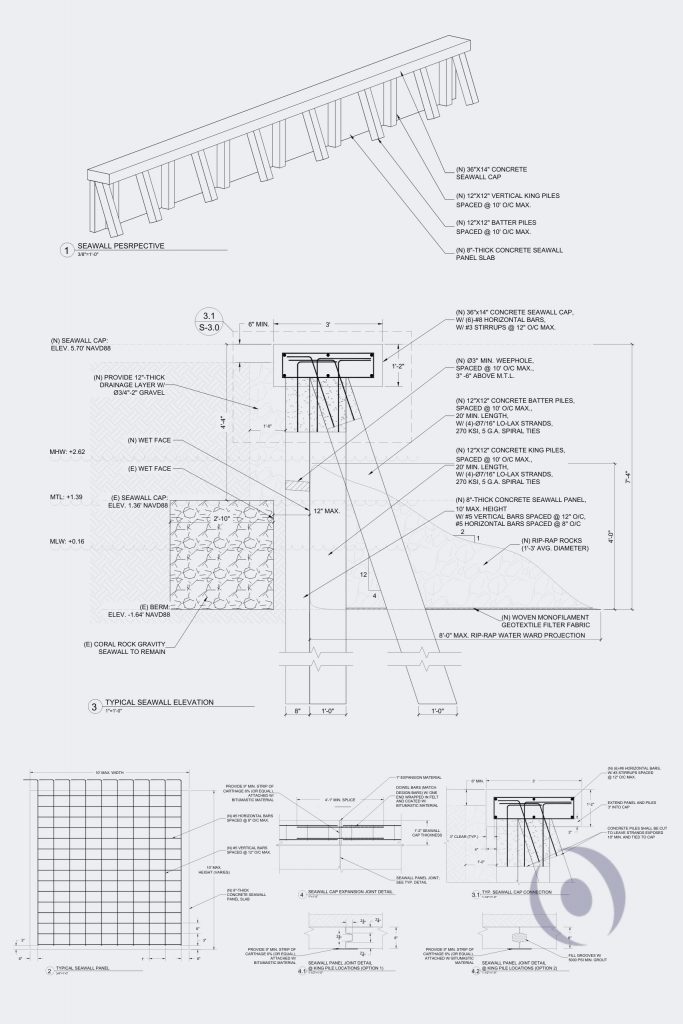
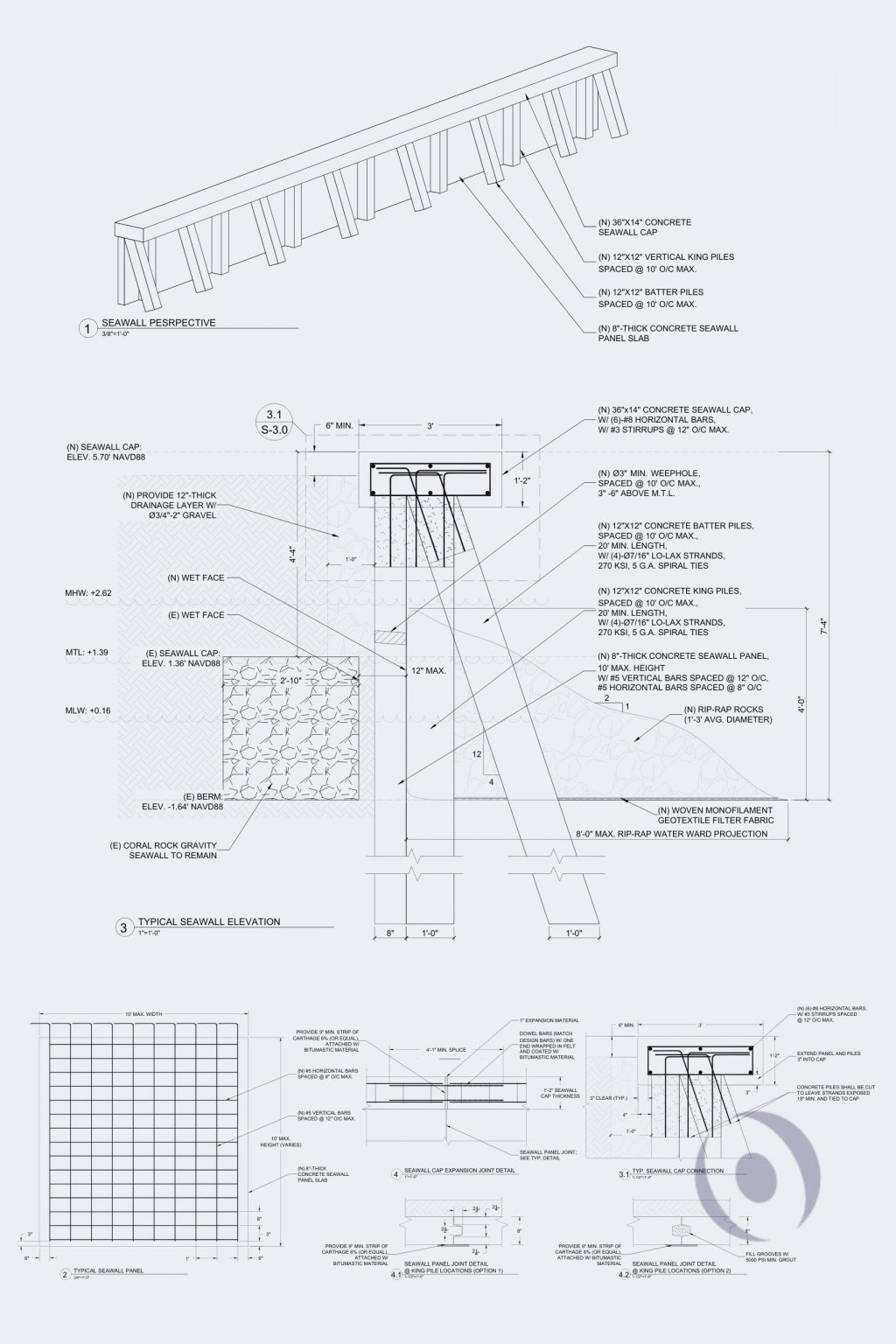
We designed a new precast concrete seawall system installed directly in front of the existing coral rock wall. The original structure stays in place as a passive backing layer while the new system carries all the structural load, which is a smarter approach that keeps the DERM permit process cleaner and the construction timeline tighter for the contractor.
Every decision was driven by real data. Using a site-specific geotechnical report for this stretch of Miami Beach canal, we confirmed subsurface soil conditions and set the minimum pile depths required to reach stable ground at least 18 feet below existing grade. The new structural system uses 12-inch by 12-inch prestressed concrete king piles and batter piles, each driven to a minimum 20-foot embedment length at maximum 10-foot spacing. Eight-inch-thick precast concrete panels reinforced with steel bars in both directions span between the piles, tied together at the top by a reinforced concrete seawall cap set at elevation +5.70 feet NAVD88 and well above adjacent grade to keep stormwater moving away from the wall.
Weepholes placed just above the waterline relieve hydrostatic pressure naturally, protecting the structure long-term. At the base, an 8-foot-wide rip-rap toe field with geotextile filter fabric (required by DERM) locks the foundation in place and eliminates the same tidal undermining that destroyed the original wall. For the five timber piles, we designed a tiered snapjacket repair protocol matched to the actual decay level at each pile, with a mandatory field stop and engineer call-in required before any pile exceeding the replacement threshold is touched. Because no as-built drawings existed for the original structure, every field instruction was written with built-in decision points and clear direction for when to proceed and when to stop and call us in.
A Waterfront Ready to Last
We delivered a complete permit-ready structural drawing package, signed and sealed by Joseph Simhon,PE a licensed Florida Professional Engineer and issued in full compliance with Florida Building Code 2023, ASCE 7-22, and ACI standards. The contractor received unambiguous drawings with built-in inspection checkpoints and escalation protocols for anything discovered below grade. DERM coordination was completed entirely in-house, without third-party delays, no gaps in the process. The property owner got a Miami Beach waterfront protected by a structural system engineered to handle South Florida’s tidal forces, storm surge, and marine environment for decades and not just patched together for a few more years.
What We’d Tell Every Waterfront Owner
Coral rock gravity walls were built for a different era of South Florida. When tidal erosion, storm surge, and time finally break one down past the point of repair, the right move is a new precast concrete seawall system engineered to actual soil conditions, designed to meet DERM requirements, and handed to a contractor with everything they need to build it without a single surprise. That is the standard NOHMIS brings to every waterfront project in Miami Beach, Miami-Dade, and Broward County.